Showing posts with label Department of Agriculture. Show all posts

Thursday, March 5, 2020

Participatory message design workshop to accelerate adoption of rice best management practices in Myanmar


The International Rice Research Institute (IRRI), through the Agricultural Development Support Project and CORIGAP project, organized a participatory message design workshop in Nay Pyi Taw on 25-27 February. Attended by 25 Department of Agriculture (DOA) staff, the workshop aimed to enhance their capacity in crafting user-friendly print and video materials to better communicate best management practices and technologies for rice production.

Monday, November 18, 2019

Assam Chief Minister welcomes agritech at ‘Krishak Samaroh’

October 2019, Assam, India - Chief Minister of Assam Shri Sarbananda Sonowal was the chief guest in a state-level farmers’ convention-cum-exhibition, known as a ‘Krishak Samaroh’, that was organised on 29 October 2019 by the Department of Agriculture, Directorate of Horticulture & Food Processing (Government of Assam) at Khanapara in Assam’s capital city Guwahati.

Over 10,000 farmers, state and district agriculture department officials visited the exhibition, which included exhibits from the Department of Agriculture, Agricultural Technology Management Agency (ATMA), agri-entrepreneurs, private-sector organisations, and Farmer-Producer Organizations.

The World Bank-funded ‘Assam Agribusiness and Rural Transformation Project’ (APART), exhibited by the Assam Rural Infrastructure and Agricultural Services Society (ARIASS) in collaboration with International Rice Research Institute (IRRI), was visited by the Chief Minister and his entourage, comprising of Assam Agriculture Production Commissioner Rajesh Kumar & State Project Director, and Director Agriculture, Manoj Kumar.

Tuesday, July 2, 2019

IRRI leads the first roundtable discussion on laser-assisted land leveling in the Philippines


IRRI and the Philippines’ Department of Agriculture (DA) increases the profitability and sustainability of rice production by utilizing appropriate mechanization as enshrined in the country’s rice roadmap. 

With this, IRRI, the DA, with other rice industry stakeholders in the Philippines convened to share progress, discuss issues, and craft strategies in promoting laser leveling technologies.

Jon Hellin, leader of Sustainable Impact Platform, said that  “Laser Land Leveling was developed in the late 1990s and is a nice example of a technology development leading to considerable field operations efficiency, and towards environmental and financial sustainability. One of the reasons for this roundtable is to discuss how to scale the laser land leveling technology, share experiences from different agroecologies, farmer typologies, different methods, and approaches to scaling.” He also emphasized the importance of partnerships that will help accelerate the access to technologies.

Thursday, May 9, 2019

Philippine Department of Agriculture strengthens support for the nationwide deployment of Rice Crop Manager


Digitally enabled agricultural advisory services supported by decades of strong science-based evidence can help accelerate agricultural development. The  Rice Crop Manager (RCM) serves as an exemplar in this era of leveraging the power of digital technology to deliver agricultural information into the hands of those who need it the most.

Since 2013, RCM has generated more than 1.85 million science-based recommendations to rice farmers on integrated crop management for the optimal use of agricultural resources for increased yield and profit. Based on the monitoring, evaluation and learning activity conducted in 2018 for large-scale dissemination of RCM, farmers who followed the recommendations increased their yield by an average of 640 kg per hectare compared with those who did not follow. Moreover, these same farmers had an average added net benefit of PhP 11,146 per hectare than those who did not follow the RCM recommendations.

Friday, March 22, 2019

Enhancing Iloilo’s rice productivity through innovations on land leveling and rice straw management


Iloilo is one of the major rice baskets in the Philippines, and mechanization could play a role in increasing the productivity of rice farming in the province. Last 7 March 7, the laser-guided land leveling system and rice straw baler were showcased to demonstrate its benefits and determine opportunities for future use.  One hundred sixty five mushroom growers, ruminant raisers, rice farmers and members of irrigators’ association, graced the event to assess the benefits that can be obtained from using these technologies to help improve farming livelihoods and accelerate the Iloilo’s rice competitiveness.

Mr. Peter Sobrevega, Regional Technical Director of the Department of Agriculture- Regional Field Office for Region 6, welcomed the participants and partners to the event and emphasized how important these technologies are in terms of improving the rice farming industry. He also mentioned that mechanized rice straw collection using rice straw balers, through the support of the RiceStrawPH project, can also help the Philippine Carabao Center (PCC) and the National Dairy Technology to improve the livestock sector.

Wednesday, December 12, 2018

Rice Crop Manager helps farmers increase harvest through planting in healthy soil


The International Rice Research Institute (IRRI), with support from the Department of Agriculture (Government of Odisha), is implementing a 5-year project that aims to increase the productivity and income of farmers in 30 districts of Odisha, using cutting-edge, scientific agricultural technologies and innovative delivery systems. 
To achieve said goals, five key areas of impact were identified -- Strengthening seed systems; Efficient management of rice fallows; Raising productivity & profitability for farmers using Rice Crop Manager (RCM) by more efficient use of inputs; Enhancing farmer access to knowledge and technologies through Rice Knowledge Bank (RKB) and Rice Doctor; and satellite-based rice crop monitoring for seamless claim settlement using geographic information systems and science-based crop insurance. 

Friday, May 11, 2018

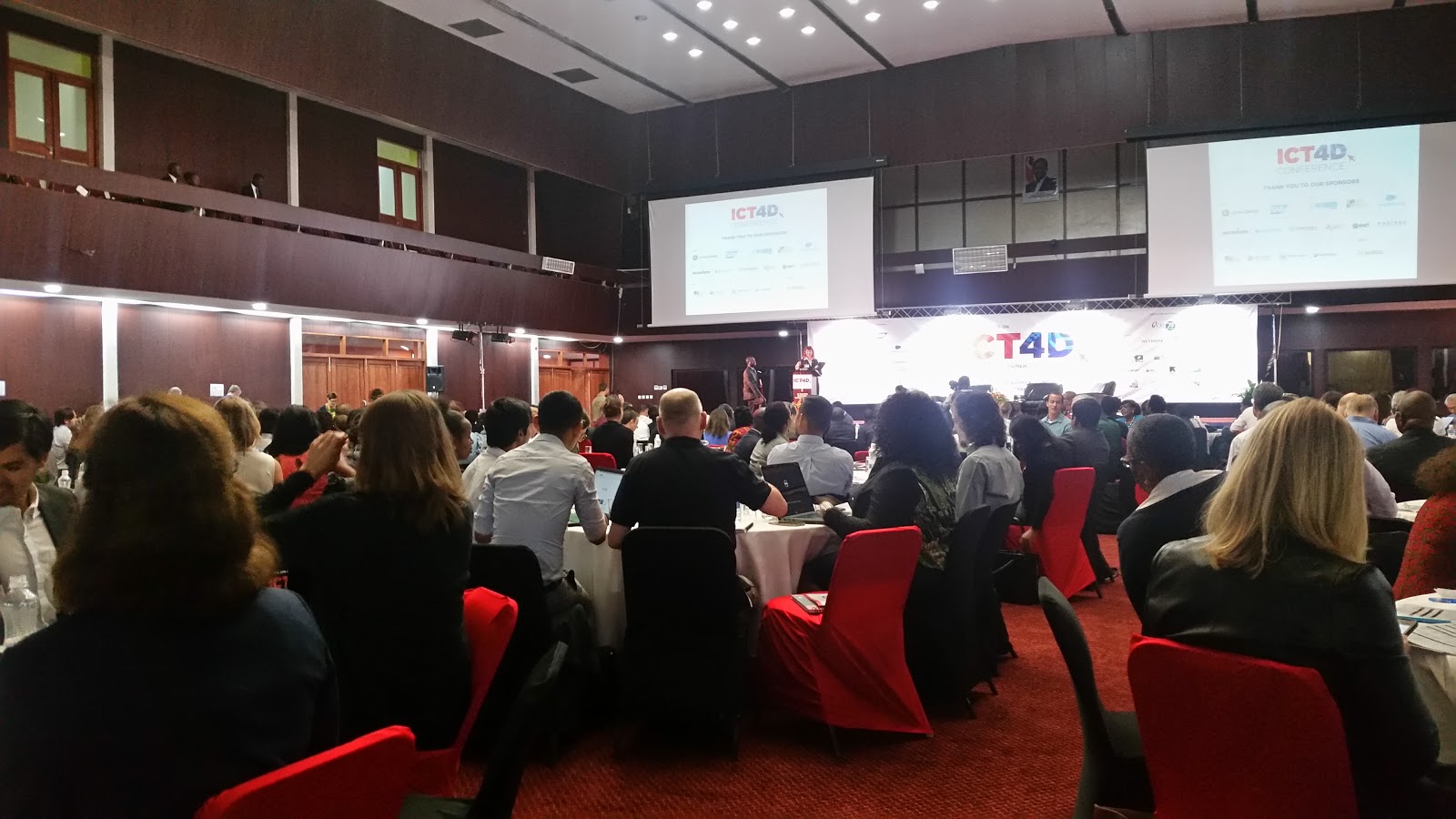
IRRI shares Rice Crop Manager experience during the 10th ICT4D Conference


Through partnership with national research partners, IRRI applies sustainable global solutions to local needs through information and communication technology (ICT) tools like Rice Crop Manager (RCM).

During the 10th ICT for Development (ICT4D) Conference, IRRI presented with other humanitarian and international development organizations like mPower Social Enterprise from Bangladesh, Farm Radio International from Malawi, and the Grantham Center for Sustainable Futures of the University of Sheffield, shares how government collaboration has been a key pathway to ownership, adoption, and in achieving scale and sustainability of agricultural information platforms.

Wednesday, January 25, 2017

Department of Agriculture launches first Philippine traditional rice seed catalog


MANILA, Philippines—The Department of Agriculture (DA), through the Bureau of Plant Industry (BPI), launched Philippine Traditional Rice Varieties, the country’s first seed catalog of indigenous rice varieties.

This catalog is the first publication of the Bureau for traditional rice varieties, according to Dr. Vivencio Mamaril, officer-in-charge of BPI and a project leader at the National Seed Council. Traditional farmers continue to grow these indigenous rice varieties because of their resistance to pests and diseases, low fertilizer requirements, and good eating quality said Mamaril. He added that plant breeders also use traditional rice varieties as sources of germplasms for developing new varieties because of their exceptional ability to withstand environmental and biological stresses as well as their excellent aroma and grains.    

Philippine Traditional Rice Varieties is a collaborative effort of BPI, which implements the DA’s programs on the plant industry sector, Philippine Rice Research Institute (PhilRice), Agri-Pinoy Rice Programs, and the International Rice Research Institute (IRRI).  It contains photos, physical descriptions of each variety at various growth stages, quantitative traits of its grains, place of origin, and other information collected by the participating research institutes. The catalog was launched during the 87th-anniversary celebration of BPI on 18-19 January.

During the event, the DA presented an award to the various projects that contributed to the seed catalog: DA-PhilRice project on Profiling Traditional Varieties, BPI-IRRI project on Characterization of Philippine Traditional Varieties, DA-IRRI Heirloom Rice Project, and the National Seed Council.

The award was given to Renato Reaño, the lead of the Characterization of Philippine Traditional Varieties project, and Dr. Casiana Vera Cruz, head of the Heirloom Rice Project, for their “significant contributions through their technical expertise in varietal characterization of Philippine traditional rice varieties.”  They shared the honor with Loida Perez of PhilRice and Mamaril.

The Philippine Traditional Rice Varieties Seed Catalog is a manifesto to the Philippines as a country blessed with the bounties of nature, according to the DA Secretary Emmanuel Piñol. He also described the catalog as an important part of the country’s effort to modernize the rice sector for the Filipino people.

Some members of the projects that contributed to the country's first seed catalog of indigenous Philippine rice varieties (from left to right): Ana Cope (IRRI), Renato Reaño (IRRI), Vivencio Mamaril (DA-BPI), Pauline Capistrano (IRRI), Joseph Sandro (IRRI), Marissa Romero (PhilRice), Magdalena Wanawan (DA-RFO CAR), and Virginia Tapat (DA-RFO CAR). 


Learn more about IRRI (www.irri.org) or follow us on social media and networks (all links down the right column).

Wednesday, December 14, 2016

Bringing climate-resilient technologies to rice farmers in the northern Philippines

LAOAG, northern Philippines—The Provincial Government of Ilocos Norte and the International Rice Research Institute (IRRI) are collaborating to introduce new rice varieties and technologies to help local rice farmers cope with climate change.

The collaborative program, known as Tikag (drought), provides smallholder farmers access to climate-resilient rice varieties and technologies under the Consortium for Unfavorable Rice Environment (CURE) and the locally fabricated mechanized dry direct seed driller developed by the MP Seeder Project (see photo).

“Hopefully, these new technologies could reduce the risks in rice production in northern Luzon and help farmers suffering from unpredictable drought and typhoons every year,” said Dr. Yoichiro Kato, a rainfed lowland agronomist at IRRI and lead of the MP Seeder Project.

Tikag is a collaborative project of local government units in Ilocos Norte, Philippine Rice Research Institute, and the Department of Agriculture (DA)-Dingras. CURE is funded by International Fund for Agricultural Development while the MP Seeder Project is funded by the DA.

Farmers’ Field Days held, respectively, in Currimao and Burgos on 7 and 8 December attracted more than 200 farmer leaders and local extension staff from 20 municipalities of Ilocos Norte. The participating farmers showed their willingness to adopt both the MP seed driller and the drought-tolerant varieties, particularly Sahod Ulan 12 which can be harvested from 93 to 99 days after planting.

The MP Seeder will significantly reduce the time and cost of establishing their rice crop, and the short duration and drought-tolerant will enable us to harvest more than before, according to  Mr.Candido Velasco and Mrs. Teresita Menor, participating farmers from Currimao.

Provincial Governor Imee Marcos, in her message to the field day participants, expressed her gratitude to IRRI’s continuous support. She encouraged the farmers to use new the drought-tolerant rice varieties and the mechanized dry direct seeding for the coming 2017 wet season. Rodolfo Garcia, mayor of Burgos, and Gladys Go-Cue, vice mayor of Currimao, attended the respective field days.

Learn more about IRRI (www.irri.org) or follow us on social media and networks (all links down the right column).

Monday, July 4, 2016

Naga City agriculture officials visit IRRI


LOS BAÑOS, Philippines—Officials of the Philippine Department of Agriculture (DA) in Naga City and City Councilor Cecilia De Asis visited the International Rice Research Institute (IRRI) on 16 June to learn about modern and traditional farming technologies.

A progressive city known for its agricultural roots and hardworking people, Naga City bagged the Agri-Pinoy Rice Achievers Award in 2015. The award recognized the hard work and support of farmers, agricultural technicians, and local farm leaders in increasing productivity and income of rice farmers.

During their visit, the guests were given seeds of IRRI-developed rice varieties and toured the Riceworld Museum.

"The museum was an eye-opening experience for me," shared De Asis. “When you see traditional farm implements, they show how innovations started. It makes you realize how farmers then had much difficulty. Back then, you had to go through a lot just to be able to eat rice. But now, there are all these modern technologies, which make things easier.”

"You won't see many of these traditional implements even in the most remote villages anymore,” observed Maria Edna Bongalonta, officer-in-charge of Naga’s Agriculture Office. “Farmers are likely to dispose of them when they are no longer used. It's good that you were able to collect and preserve these artifacts for the younger generation.

Learn more about IRRI (www.irri.org) or follow us on social media and networks (all links down the right column).

Friday, December 18, 2015

DA, IRRI, and SMART to boost farmers’ incomes through text messaging


Tarlac, Philippines – For two years, the Department of Agriculture (DA) and the International Rice Research Institute (IRRI) have been collaborating on a decision tool that uses mobile devices and computers in providing recommendations to rice farmers to help them increase their yield.


Funded by the DA through the Food Staples Sufficiency Program (FSSP), this decision tool called Rice Crop Manager (RCM), has posted positive results of increasing the yield and net income of farmers. Initial research shows that rice farmers in Isabela, Nueva Ecija, Oriental Mindoro, and Agusan del Norte increased their average yield by 300 kilograms and average net income by about PHP 4,000 per crop per hectare.

Thursday, December 10, 2015

Experts urge Philippine rice industry to be more productive and competitive


DA Sec believes Filipino farmers can be more productive and competitive with the right public and private sector support
Makati City, Philippines - By 2017, the domestic rice market could be flooded with imports from other ASEAN countries. Under the ASEAN Integration 2015, the region will be transformed into a single market. There will be free movement of goods, services, investment, skilled labor, and capital among ASEAN nations to help the region compete in the global market.

Under the agreement, many industries, including agriculture “shall be open and national treatment granted to investors” both at the pre- and post-establishment stages. Restrictions on imported rice will be gradually lifted over a 5-year term.

This could hurt local rice industries and farmers if measures are not taken to help them become more competitive.

In the Philippines, Nueva Ecija is the gold standard when it comes to the country’s rice production. However, compared to similarly intensively cultivated sites such as Can Tho in Vietnam, Suphan Buri in Thailand, Tamil Nadu in India, Zhe Jiang in China, and West Java in Indonesia, Nueva Ecija still has much room for improvement.

"Aside from being in the list of top ten rice-producing countries in the world, the selected sites have more or less similar climatic conditions,” explained Piedad Moya, co-project leader of a study on Philippine rice economy relative to its neighboring countries. “All of them are irrigated, and can plant at least two rice crops a year."

The study, Benchmarking Philippine rice economy relative to major rice-producing countries in Asia, is funded by the Department of Agriculture (DA),  and undertaken in close collaboration with the Philippine Rice Research Institute (PhilRice), and the International Rice Research Institute (IRRI). 

Although production costs in Nueva Ecija may be lower (Php12.41) than other rice importers, such as China (Php14.07) and Indonesia (Php15.77), it is still significantly higher compared with exporters such as India (Php8.87), Thailand (Php9.46), or Vietnam (Php6.53) per kilogram of dry paddy.

The high cost of producing a kilogram of paddy in Nueva Ecija is due to the huge labor requirement during manual transplanting (25 man-days) and harvesting or threshing (21 man-days). Vietnam, on the other hand, which has the lowest production cost, uses direct seeding (2 man-days) and combine harvesters (2 man-days) resulting in increased productivity and higher efficiency. 

The study also noted higher milling efficiency in almost all rice-exporting countries that leads to fewer broken grains and higher milling recovery. This is attributed to rice varieties that have similar grain shape and length. Moreover, farmers in rice-exporting countries have better bargaining power.

However, experts from PhilRice and IRRI believe that Filipino rice farmers can be more competitive by following suit.

"In the context of the ASEAN economic community, and in anticipation of the free flow of goods among member countries, enhancing competitiveness cannot be just a soundbite,” DA Secretary Proceso Alcala remarked. “We must translate competitiveness into practical interventions that lead to the capacity of farmers to compete and expand their engagement in agribusiness opportunities."

Madonna Casimero, senior scientist and IRRI’s Philippine research and development coordinator, agrees.

"As the Honorable Secretary stated, the Filipino farmer is at the center of the Food Staples Sufficiency Program (FSSP),” she said. "Hence, IRRI and the DA are implementing seven flagship FSSP initiatives, including the benchmarking study, aimed at helping our Filipino farmers."

The 3rd research seminar of the Benchmarking Philippine rice economy relative to major rice-producing countries in Asia was held in Makati City on 03 December.

~

Learn more about IRRI (www.irri.org) or follow us on social media and networks (all links down the right column).

Friday, November 27, 2015

Trainees learn the basics of scientific writing and rice production


The IRRI Training Center, in collaboration with Project IPaD, conducted the Basic Scientific Writing Course (BSWC) on 16-20 November and the Basics of Rice Production Course (BRPC) on 25-27 November 2015 at the IRRI headquarters.

The BSWC is a five-day course intended to help scientists and researchers develop their skills in written communication, making them more effective in sharing knowledge and research results in the future. The course was attended by 17 scientists and researchers from IRRI, the Department of Agriculture, and the University of the Philippines Los Baños. The BSWC was facilitated by Ms. Teresita Rola and Ms. Majilene Marikit and coordinated by Ms. Maria Socorro Arboleda.

On the other hand, the BRPC is a three-day orientation on the whole process of rice production, from seed processing to postharvest management. The course is designed to update participants’ knowledge and skills on best practices and technologies associated in rice farming. This course gives participants a chance to get their feet wet in the mud, providing hands-on experience of actual field preparations. The course was attended by 25 young researchers from different Department of Agriculture offices throughout the Philippines. They were all supported by Project IPaD. The course was coordinated and facilitated by Engr. Eugene Castro, Jr., (see photo below) with Ms. Majilene Marikit as co-facilitator.


Project IPaD (Improving Technology Promotion and Delivery Project) is jointly led by PhilRice, the DA-Agricultural Training Institute, and IRRI. It aims to improve rice technology promotion and delivery by enhancing the capability of the next generation of extension professionals and other knowledge intermediaries. Project IPaD supported 12 participants for the BSWC and 25 participants for the BRPC.

Rice production, writing, and communication skills courses are scheduled to be offered again in 2016 at the IRRI Training Center.

For training dates and other information, please visit http://www.training.irri.org/short-courses/2016-list-of-short-courses. 

Learn more about IRRI (www.irri.org) or follow us on social media and networks (all links down the right column).

Wednesday, November 11, 2015

Supporting food security from space

The Sentinel-1A mosaic stretches from Pakistan to the Philippines, with green areas showing vegetation, including rice (SAR imagery from ESA: Sentinel-1A © Copernicus data (2015). Background from Google Earth © Google Inc. Sentinel 1A mosaic created by sarmap and IRRI using Mapscape-RICE).

Los Baños, Philippines and Purasca, Switzerland Standing rice crops in some parts of the world are routinely devastated by storms and extreme weather events, threatening the food security and livelihood of half of humanity. “sarmap and IRRI have developed tools that bring more transparency and accurate information to those who manage rice production, which is certainly important in general, and absolutely crucial for meaningful and targeted disaster response,” said Robert Zeigler, director general of the International Rice Research Institute (IRRI). “Decision-makers need to know when and where rice is planted and harvested.”

Friday, October 16, 2015

IRRI to reduce risks and increase safety in its farm operations


The Experiment Station (ES) at the IRRI Headquarters is undertaking stricter measures for safer farm and machinery operations after completing its risk analysis with the Risk Management Quality Assurance (RMQA) unit.  The five teams under ES--BioEnvironment, field operations, mechshop and warehouse, crop pesticides applicators, and rice mill and crop production--participated in identifying occupational risks, the severity of each, and corresponding steps for mitigation.

Risk awareness and capacity building
Four machinery operators and two members of the ES management team are now certified through a Philippine Department of Agriculture and TESDA program. In addition, all ES staff have completed first aid training with IRRI’s Safety and Security Services.

New safety equipment
ES has acquired new safety equipment, including a radio transmitter, which provides coverage across the farm, and a protective safety barrier for the combine harvester.

In-house training
The machinery operation certification program, developed collaboratively between the Training Center (TC), ES, and Postharvest started on 14 October. All equipment operators and mechanics are expected to complete this ongoing program before the end of the year. This certification program will be held annually and evaluated and updated on a regular basis.

The integrated pest management and agro-chemical safety training and certification program is designed for the crop production team responsible for pest and disease management. The program was developed in collaboration with TC and will start in November. The team is also undergoing training on pest and disease identification and management with the CESD entomology and plant pathology groups.

Learn more about IRRI (www.irri.org) or follow us on the social media and networks (all links down the right column).

Friday, September 11, 2015

DA and IRRI to host ministers from ASEAN Plus Three and India tomorrow


Los Baños, Laguna — Ministers and dignitaries from 11 Asian countries will visit the International Rice Research Institute (IRRI) headquarters tomorrow, 12 September. The visit is part of the 37th meeting of the ASEAN Ministers on Agriculture and Forestry (AMAF), in addition to the 15th AMAF Plus Three Meetings with China, Japan, and South Korea hosted by the Philippine Department of Agriculture, led by Secretary Proceso Alcala, this year. India will also participate.
"IRRI supports ASEAN members in their national rice and food security programs by providing the necessary scientific research as well as technical support and capacity-building," said Robert S. Zeigler, IRRI director general.

The ASEAN Integrated Food Security Framework, along with the Strategic Plan of Action on Food Security in the ASEAN Region, enables sharing of any agricultural commodity. A careful assessment of  the various ASEAN+3 countries reveals extensive variation in natural resources for rice production. This is also the case for other crops and agricultural commodities.

"In effect, each ASEAN nation has a country food security agenda.  Each country’s national strategy is linked to the ASEAN regional agenda, bound together by shared aspirations, and facilitated by trade. ASEAN countries could look at exporting high-quality rice to Europe, for example. And Africa is a major growth area because of its rising demand for rice. All these topics, including IRRI’s support to the Philippine Department of Agriculture’s Food Staples Sufficiency Program will be part of the discussions during the ASEAN event," Zeigler noted.

Learn more about IRRI (www.irri.org) or follow us on the social media and networks (all links down the right column). 

Philippines: Ecological engineering in rice production proven to bring tangible benefits for farmers

By Finbarr Horgan

Native stingless bees pollinate sunflowers at an ecologically engineered site in Rizal.
Ecological engineering is a management strategy that strengthens the rice field’s natural capacity to cope with pests by building biodiversity. Field tests of this technology using fruits and vegetable crops to attract beneficial insects in rice paddies reduced pest populations. Results also showed that farmers’ practice of using insecticides sustained higher planthopper and leaffolder damage compared to control and ecologically engineered fields. These were some of the results of research activities under the Ecological engineering approaches to restore and conserve ecosystem services for pest management project launched in 2013. The goal of the project was to reduce the environmental impact of rice farming and promote sustainable rice production.

Friday, September 4, 2015

Food security a top priority for ASEAN ministers and senior officials


"It is high time for ASEAN member countries, which are in the largest rice-growing regions of the world to support the scientific research necessary for the sustainability of their rice sectors," said Bruce Tolentino, deputy director general for communication and partnerships of the International Rice Research Institute (IRRI), on ensuring food security and strengthening cooperation in agriculture across the region.

Sixteen ministers are scheduled to visit IRRI on 12 September as part of the 37th meeting of the ASEAN Ministers on Agriculture and Forestry (AMAF), in addition to the 15th AMAF Plus Three Meetings with China, Japan, and South Korea hosted by the Philippines this year.

"The crucial role that IRRI fulfills is providing the scientific foundation, technical support, and capacity-building to each of the ASEAN member-countries in pursuing their own national rice and food security programs," Tolentino said.

Each ASEAN member-nation has its own strategy and approach for meeting targets in this area.

Some Southeast Asian countries, such as Vietnam or Thailand, export rice, while the Philippines or Indonesia, among others, are rice importers.

Myanmar is on its way to regaining its agricultural competitiveness. In the 1950s Myanmar led the ASEAN countries in rice exports.

Brunei and Singapore, on the other hand, do import rice, and only the best quality rice. Moreover, Singapore is making investments to become the ASEAN center for biotechnology.

"So, each of these countries has differing approaches to achieving their food security goals. But all of these countries are bound together because there is a common ASEAN-wide framework for food security," Tolentino explained.

That framework, according to him, which also includes a strategic action plan on food security, does not simply focus on strengthening the national capacity of each of the ASEAN member countries to produce any agricultural commodity, but also facilitation of trade.

The strategic action plan was conceptualized as part of the ASEAN member states’ need for a long-term agricultural development plan that focuses on sustainable food production and trade, especially in the context of problems brought about by the food price crisis in 2007–2008.

The ASEAN Integrated Food Security Framework, along with the Strategic Plan of Action on Food Security in the ASEAN Region, enables sharing of any agricultural commodity. A close inspection of various countries reveals variation in natural resources for rice production. This is also the case for other crops and agricultural commodities.

"In effect, there will be a country agenda and there will be a regional agenda, tied together by trade. ASEAN countries could look at exporting high-quality rice to, say, Europe, for example. And Africa is a major growth area because of its rising demand for rice. All these topics, including IRRI’s support to the Philippine Department of Agriculture’s Food Staples Sufficiency Program will be part of the discussions during the ASEAN event next week," he noted.

Thursday, July 9, 2015

PRISM conducts 5-day writeshop to draft its operations manual


Calamba City, Laguna, Philippines - The Philippine Rice Information System (PRISM) team members from the Philippine Rice Research Institute (PhilRice) and IRRI had a five-day (6-10 July 2015) writeshop to draft the 1st version of the PRISM operations manual.

The manual is a compilation of protocols for data collection, data and image processing, yield estimation, crop health assessment, data management, conduct of training, and accessing PRISM data. This manual will be essential for the Philippine Department of Agriculture to be able to conduct PRISM activities in both national and regional levels.

This writeshop activity involved specialists on remote sensing, geographic information systems (GIS), crop health, information technology ( IT ), and development communication to package the protocols. Members of the PRISM management team from IRRI, such as Dr. Andy Nelson,  Dr. Alice Laborte, and  Dr. Nancy Castilla, served as writers and reviewers.  Printed copies of the manual will be distributed to agencies under the Department of Agriculture.

Group photo: (L-R, 3rd row) Denis Diaz-Maco, Leonardo Marquez, Arturo Arocena Jr., Andy Nelson, Dindo King Donayre, Ulysses Duque (L-R, 2nd row) Henry Cayaban, Miguel Abriol-Santos, Arnel Rala, Jean Rochielle Mirandilla, Emma Quicho, Jesiree Elena Ann Bibar, Alice Laborte, Ruvicyn Bayot, Ethel Princess Banasihan; (L-R, 1st row) Nancy Castilla, Hannah Zarah Bhatti, Jeny Raviz, Pristine Mabalot, Mary Anne Gutierrez, Mary Rose Mabalay, Mabel Barroga, Joselito Villa

Learn more about IRRI (www.irri.org) or follow us on the social media and networks (all links down the right column).

Thursday, June 18, 2015

Philippines: Heirloom rice awes foodies at BellySima


The unique culinary features of heirloom rice varieties from the Cordilleras were featured at the BellySima Food Festival as part of the market outreach of the Heirloom Rice Project (HRP) that is jointly implemented by the Department of Agriculture and the International Rice Research Institute. BellySima Food Festival 2015, held at the Glorietta 3, Makati, City on 12-13 June 2015, features and promotes healthy Filipino food options and experiences among consumers and entrepreneurs.

Heirloom rice was included in the Top 10 People's Choice among 40 participants to the festival. Event organizer RJ Ledesma of the Mercato Group expressed appreciation of the participation of HRP. "It is worth celebrating that more people know of these fantastic rice varieties in the country," Ledesma said.

At the festival, heirloom rice Ominio from the Mountain Provinces and the Tinawon rice from Ifugao, along with other heirloom varieties from Benguet and Kalinga were cooked and sampled by food enthusiasts. All these rice varieties were grown by highland farmers with the Rice Terraces Farmers Cooperative (RTFC), one of the implementing partners of HRP.

HRP is working toward increasing productivity of heirloom rice, which takes 6–7 months to mature and are thus grown only once a year. By linking heirloom rice to potential export and domestic markets, farmers are able to sustain their livelihoods,  the cultural prize of which is that the rice terraces that the region is famous for are preserved.

The HRP is a shared collaboration between the DA-Philrice, DA-Cordillera Administrative Region field office, local state colleges and universities, and IRRI.

The Bellysima Food Festival is a regular event at Glorietta 5 beginning 19 June 2015.

Learn more about IRRI (www.irri.org) or follow us on the social media and networks (all links down the right column).