In a Facebook post dated 03 October 2020 by the official FB account of the Rice Competitiveness Enhancement Fund (RCEF) of the Philippine Department of Agriculture, a variety of Green Super Rice called NSIC Rc 480 was able to almost double its maximum yield per hectare, from 4.4 tons to 8.3 tons, during the Palaysikatan Field Day of the Philippine Rice Research Institute (PhilRice) in Sto. Tomas, Davao Del Norte.
Showing posts with label PhilRice. Show all posts
Wednesday, December 16, 2020
Wednesday, December 18, 2019
IRRI-PhilRice-JIRCAS collaborative research project holds end-season review with farmer cooperators
![]() |
| Photo by Job Ramos (PhilRice) |
WeRise enables data-driven decision support for rainfed rice systems through science-based weather and crop advisories including the best time to plant and apply fertilizer as well as the suitable varieties/possible varietal combinations for planting to maximize the entire cropping season. It integrates localized seasonal climate predictions and real-time weather data with a crop growth model. Under the IPJCRP, WeRise is being developed to suit the conditions of Philippine rainfed rice areas.
Labels:
farmer cooperators,
IRRI,
JIRCAS,
PhilRice,
rainfed rice systems,
WeRise
IRRI-PhilRice-JIRCAS collaborative research project holds the 2nd WeRise stakeholders’ meeting
Monday, October 21, 2019
Mindanao farmers learn about sustainable straw management from RiceStrawPH
![]() |
| Farmers and extension agents witness the operation of small round baler in Mlang, North Cotabato. |
Rounding up their initiatives to educate farmers and encourage mechanized straw collection in North Cotabato and Bukidnon this October, IRRI, in partnership with PhilRice, Philippine Carabao Center and Philmech held their last two demonstrations last October 1 and 4. The project runs under the DA-BAR funded “Development of Sustainable Rice Straw Practices and Technologies for Food, Feed and Bioenergy in the Philippines” (RiceStrawPH).
The demonstration aims to promote mechanized straw collection for sustainable management of rice straw for alternative uses to minimize the effect on the environment such as greenhouse gas emissions from in-field burning and anaerobic decomposition in the field. The Chief of the Office of Provincial Agriculture (OPAG) in North Cotabato, Ms Abedece Curtiz, gave full support to the initiative, remarking that the rice straw baler being used to collect rice straw can help farmers make money by using it as feeds, as medium of mushroom production, and to generate bioenergy.
Labels:
capacity building,
IRRI,
mechanized farming,
PCC,
Philmech,
PhilRice,
RiceStrawPH,
sustainable rice straw management
Wednesday, September 4, 2019
Compositional analysis shows beta-carotene biofortified Golden rice is safe and has potential to address Vitamin A deficiency
The introduction of any new product or technology is often met with questions and concerns. For food crops like Golden Rice, which is genetically modified to produce beta-carotene in its grains, most people want to know whether it is safe to eat, and if it has any additional health benefits. In an article published in the Journal of Agriculture and Food Chemistry in June 2019, Dr. B.P. Mallikarjuna Swamy and the Healthier Rice team at IRRI and PhilRice, presented findings showing the nutrient content of Golden Rice, and the potential nutritional impact of the added beta-carotene content.
Leading regulatory agencies evaluate food safety claims based on the concept of substantial equivalence, a term coined by the Organisation of Economic Co-operation and Development (OECD) in 1993 and adopted by international organizations like the Food and Agriculture Organization of the United Nations (FAO) and World Health Organization (WHO), which refers to the need to provide evidence demonstrating that a genetically modified food crop is as safe as its existing counterparts. Compositional analyses, such as those presented in Swamy’s publication, measure and compare specific components of new food crops and compare this with existing plant counterparts.
Labels:
biofortification,
FAO,
Golden Rice,
healthier rice,
IRRI,
micronutrient deficiency,
OECD,
PhilRice,
WHO
Friday, November 23, 2018
Enhancing livelihoods through rice straw: farmer groups learn about rice straw collection options
The Philippine Rice Research Institute (PhilRice), Philippine Carabao Center (PCC), and IRRI conducted a rice straw baler demonstration at the PhilRice Central Experiment Station in Muñoz, Nueva Ecija for the project “Development of Sustainable Rice Straw Management Practices and Technologies for Bioenergy, Food, and Feed in the Philippines”, or RiceStrawPH.
The RiceStrawPH project aims to develop and provide alternative uses of rice straw in order to add value to the rice byproduct, instead of farmers simply burning them. “We are looking for ways where Filipinos can enhance their livelihoods through innovative uses of rice straw, like mushroom growing and ruminant feed.” said Dr. Caesar Tado of PhilRice, one of the project leaders.
“In the Philippines, we have legislation that prohibits the burning of rice straw, and Nueva Ecija also has a local ordinance that discourages this practice. This helped the Philippines significantly decrease rice straw burning incidence from more than 90% in the early 2000s, to around 30% in 2017.” he added.
Thursday, July 12, 2018
Philippine partners learn about mechanized straw collection
One of the major technological developments that makes rice straw disposal more efficient is the rice straw baler. This machine can pick up and collect loose straw in the field, and reduce it into compact bales that can be easily handled and transported to areas where it can be used further. Using this machine reduces labor requirement by 90% compared with manually collecting the rice straw spread out in the field.
Labels:
IRRI,
PhilRice,
rice straw management,
rice straw technology
Wednesday, April 4, 2018
Sowing the seeds of rice self-sufficiency in Africa through capacity building
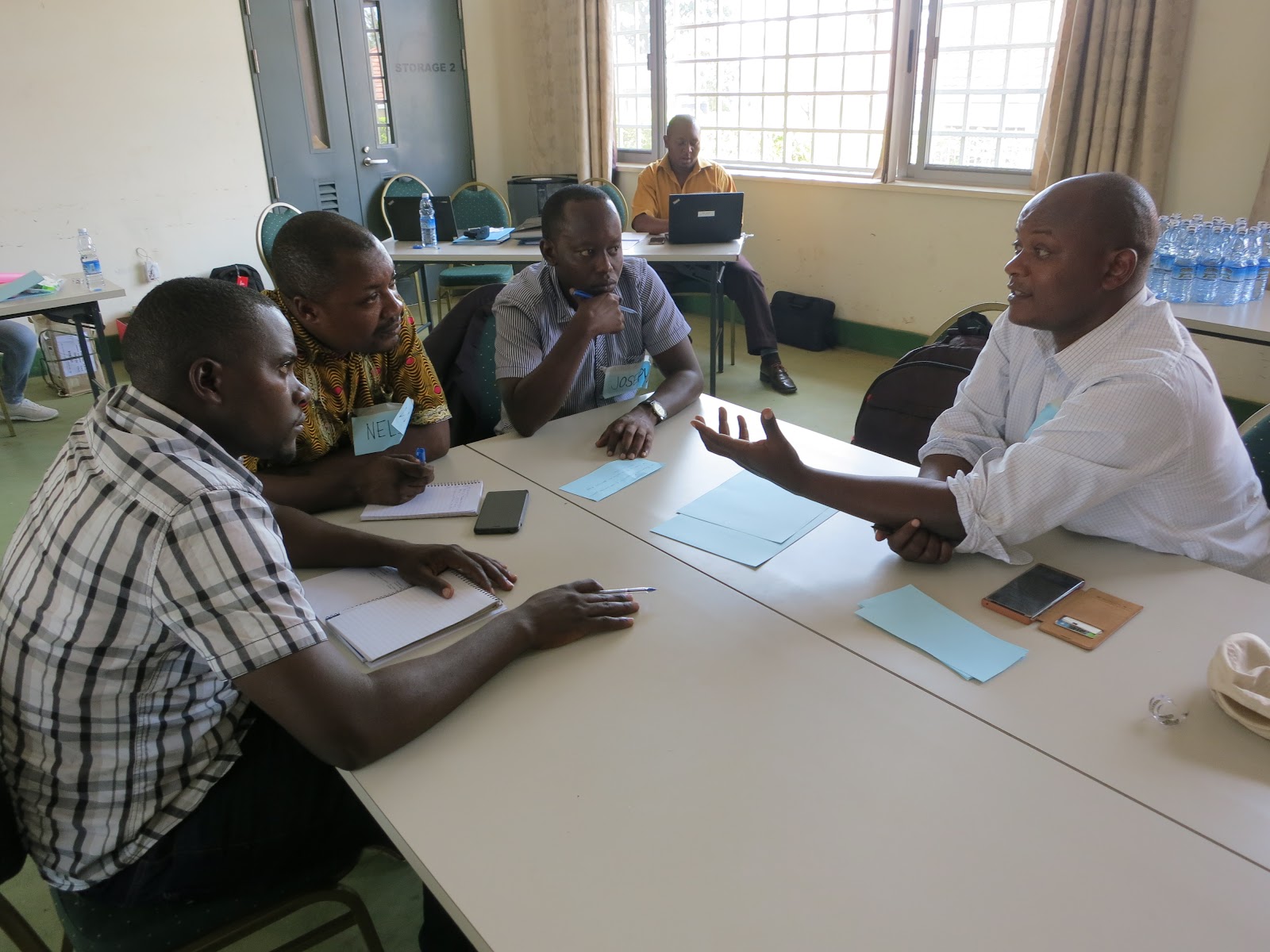
| Workshop participants discuss constraints in the production and delivery of quality rice seed in Uganda. |
IRRI works closely with national research and extension systems (NARES) in making scientific knowledge and expertise on rice science more widely accessible. Together with the Philippine Rice Research Institute (PhilRice) and funded by the Japan International Cooperation Agency (JICA), IRRI aims to improve the quality of rice seed production, which contributes to food and livelihood security of smallholder farmers in member countries of the Coalition of African Rice Development (CARD).
Since 2016, IRRI-JICA-PhilRice has developed and facilitated two training programs in the Philippines: the three-week Quality Breeder and Foundation Seed Course conducted at IRRI Headquarters and the eight-week Specialized Course on Rice Seed Production and Extension held at PhilRice Central Experiment Station. To date, 83 individuals have been trained from 18 out of 23 CARD member countries.
Thursday, March 30, 2017
PhilRice, IRRI host training to help improve productivity of African rice farmers
Engr. Eugene Castro of IRRI Education welcomes the participants from Africa and the Philippines
to the rice seed production training at the PhilRice Central Experiment Station.
MUĂ‘OZ, Philippines—The Philippine Rice Research Institute (PhilRice) Central Experiment Station in Nueva Ecija is currently hosting a training designed to provide participants with knowledge and skills in rice seed production and the promotion of quality seed among African farmers.
The specialized course on rice seed production and extension methods, a collaborative initiative of the International Rice Research Institute (IRRI) and its Philippine research partner PhilRice, runs from 6 March to 28 April. The course covers land and seedling preparation, planting, field problem diagnosis, harvesting, and postharvest practices. Extension methods and technology transfer strategies promoting the use of quality seeds will also be a key component of the program. From 9 to 16 April, the participants will be at the IRRI headquarters in Laguna for some supplementary field, laboratory, and classroom activities.
There are 19 participants from Ethiopia, Ghana, Kenya, Mozambique, Sierra Leone, Tanzania, and Uganda attending the 8-week course. The participants were selected based on the work they do in their respective countries’ agricultural research institutions and public extension programs. Others represent non-government organizations, universities, and the private sector. In addition, 10 participants from the Philippine Department of Agriculture are also attending.
The training program is one of the activities under the Extension Capacity Development for Rice Food Security in Africa Project, which is funded by the Japan International Cooperation Agency. This project stands alongside the rice value chain improvement initiatives of different members of the Coalition of African Rice Development and aims to contribute to the fulfillment of the respective national rice development strategies of its member countries.
Wednesday, January 25, 2017
Department of Agriculture launches first Philippine traditional rice seed catalog
This catalog is the first publication of the Bureau for traditional rice varieties, according to Dr. Vivencio Mamaril, officer-in-charge of BPI and a project leader at the National Seed Council. Traditional farmers continue to grow these indigenous rice varieties because of their resistance to pests and diseases, low fertilizer requirements, and good eating quality said Mamaril. He added that plant breeders also use traditional rice varieties as sources of germplasms for developing new varieties because of their exceptional ability to withstand environmental and biological stresses as well as their excellent aroma and grains.
Philippine Traditional Rice Varieties is a collaborative effort of BPI, which implements the DA’s programs on the plant industry sector, Philippine Rice Research Institute (PhilRice), Agri-Pinoy Rice Programs, and the International Rice Research Institute (IRRI). It contains photos, physical descriptions of each variety at various growth stages, quantitative traits of its grains, place of origin, and other information collected by the participating research institutes. The catalog was launched during the 87th-anniversary celebration of BPI on 18-19 January.
During the event, the DA presented an award to the various projects that contributed to the seed catalog: DA-PhilRice project on Profiling Traditional Varieties, BPI-IRRI project on Characterization of Philippine Traditional Varieties, DA-IRRI Heirloom Rice Project, and the National Seed Council.
The award was given to Renato Reaño, the lead of the Characterization of Philippine Traditional Varieties project, and Dr. Casiana Vera Cruz, head of the Heirloom Rice Project, for their “significant contributions through their technical expertise in varietal characterization of Philippine traditional rice varieties.” They shared the honor with Loida Perez of PhilRice and Mamaril.
The Philippine Traditional Rice Varieties Seed Catalog is a manifesto to the Philippines as a country blessed with the bounties of nature, according to the DA Secretary Emmanuel Piñol. He also described the catalog as an important part of the country’s effort to modernize the rice sector for the Filipino people.
Learn more about IRRI (www.irri.org) or follow us on social media and networks (all links down the right column).
Wednesday, December 14, 2016
Bringing climate-resilient technologies to rice farmers in the northern Philippines
LAOAG, northern Philippines—The Provincial Government of Ilocos Norte and the International Rice Research Institute (IRRI) are collaborating to introduce new rice varieties and technologies to help local rice farmers cope with climate change.
The collaborative program, known as Tikag (drought), provides smallholder farmers access to climate-resilient rice varieties and technologies under the Consortium for Unfavorable Rice Environment (CURE) and the locally fabricated mechanized dry direct seed driller developed by the MP Seeder Project (see photo).
“Hopefully, these new technologies could reduce the risks in rice production in northern Luzon and help farmers suffering from unpredictable drought and typhoons every year,” said Dr. Yoichiro Kato, a rainfed lowland agronomist at IRRI and lead of the MP Seeder Project.
Tikag is a collaborative project of local government units in Ilocos Norte, Philippine Rice Research Institute, and the Department of Agriculture (DA)-Dingras. CURE is funded by International Fund for Agricultural Development while the MP Seeder Project is funded by the DA.
Farmers’ Field Days held, respectively, in Currimao and Burgos on 7 and 8 December attracted more than 200 farmer leaders and local extension staff from 20 municipalities of Ilocos Norte. The participating farmers showed their willingness to adopt both the MP seed driller and the drought-tolerant varieties, particularly Sahod Ulan 12 which can be harvested from 93 to 99 days after planting.
The MP Seeder will significantly reduce the time and cost of establishing their rice crop, and the short duration and drought-tolerant will enable us to harvest more than before, according to Mr.Candido Velasco and Mrs. Teresita Menor, participating farmers from Currimao.
Provincial Governor Imee Marcos, in her message to the field day participants, expressed her gratitude to IRRI’s continuous support. She encouraged the farmers to use new the drought-tolerant rice varieties and the mechanized dry direct seeding for the coming 2017 wet season. Rodolfo Garcia, mayor of Burgos, and Gladys Go-Cue, vice mayor of Currimao, attended the respective field days.
Learn more about IRRI (www.irri.org) or follow us on social media and networks (all links down the right column).
The collaborative program, known as Tikag (drought), provides smallholder farmers access to climate-resilient rice varieties and technologies under the Consortium for Unfavorable Rice Environment (CURE) and the locally fabricated mechanized dry direct seed driller developed by the MP Seeder Project (see photo).
“Hopefully, these new technologies could reduce the risks in rice production in northern Luzon and help farmers suffering from unpredictable drought and typhoons every year,” said Dr. Yoichiro Kato, a rainfed lowland agronomist at IRRI and lead of the MP Seeder Project.
Tikag is a collaborative project of local government units in Ilocos Norte, Philippine Rice Research Institute, and the Department of Agriculture (DA)-Dingras. CURE is funded by International Fund for Agricultural Development while the MP Seeder Project is funded by the DA.
Farmers’ Field Days held, respectively, in Currimao and Burgos on 7 and 8 December attracted more than 200 farmer leaders and local extension staff from 20 municipalities of Ilocos Norte. The participating farmers showed their willingness to adopt both the MP seed driller and the drought-tolerant varieties, particularly Sahod Ulan 12 which can be harvested from 93 to 99 days after planting.
The MP Seeder will significantly reduce the time and cost of establishing their rice crop, and the short duration and drought-tolerant will enable us to harvest more than before, according to Mr.Candido Velasco and Mrs. Teresita Menor, participating farmers from Currimao.
Provincial Governor Imee Marcos, in her message to the field day participants, expressed her gratitude to IRRI’s continuous support. She encouraged the farmers to use new the drought-tolerant rice varieties and the mechanized dry direct seeding for the coming 2017 wet season. Rodolfo Garcia, mayor of Burgos, and Gladys Go-Cue, vice mayor of Currimao, attended the respective field days.
Learn more about IRRI (www.irri.org) or follow us on social media and networks (all links down the right column).
Friday, September 2, 2016
GIS skills of Philippine agriculture field officers sharpened
LOS BAĂ‘OS, Philippines—The Philippine Rice Information System (PRISM) project is conducting a series of workshops on basic geographic information systems (GIS) for its regional partners. Funded by the Philippine Department of Agriculture (DA), the activity trains field officers and local government units in visualizing rice area and yield, GPS-based field observations, and other data generated by PRISM for planning programs and interventions for the country’s rice sector.
The training (photos above) is enhancing the skills of DA-Regional Field Offices and local government units (LGU) staff in using QGIS, a free and open source GIS software. The workshop uses actual data collected at PRISM monitoring sites throughout the country.
At the end of each season, PRISM generates accurate and timely information on rice areas, the start of cropping seasons, and rice yield that can help the national government and the rice-growing regions develop policies and plans related to rice production, particularly in mitigating the impacts of natural calamities and reducing yield losses caused by pests. Around 19 tropical cyclones or storms enter the Philippine Area of Responsibility every year, and of these, usually 6 to 9 make landfall causing considerable crop damage. The information collected by PRISM is available through its portal.
The training helps in understanding the value of presenting data in map format, according to a workshop participant.
"The training is useful in data processing and analysis," added another enthusiastic participant. “The information generated will serve as the basis for decision-making, evaluation, and development of rice projects.”
The Basic GIS Training was held in July and August for DA representatives from:
12-14 July: DA-RFO IX and Department of Agriculture and Fisheries-Autonomous Region in Muslim Mindanao (DAF-ARMM), which was held in Laguna
19-21 July: DA-RFOs I and Cordillera Administrative Region (CAR) in La Union
19-21 July: DA-RFOs VI and Negros Island Region (NIR) in Iloilo City
26-28 July: DA-RFOs V, VII, and VIII in Cebu City
9-11 August: DA-RFOs X, XI, and XII in Davao City
16-18 August: DA-RFO’s IV and IVB in Tagaytay City
23-25 August: DA-RFO III in Pampanga
23-25 August: DA-RFO II in Tuguegarao City
23-25 August: Philippine Rice Research Institute (PhilRice) facilitators in Nueva Ecija
The remaining workshops will be held in September and October 2016 for DA-RFO XIII and PRISM crop health specialists, respectively.
The workshops are being conducted by PRISM staff from the International Rice Research Institute(IRRI) and PhilRice. The lead trainers from IRRI are Arnel Rala, Cornelia Garcia, Aileen Maunahan, and Jeny Raviz. The PhilRice trainers are Mary Rose Mabalay, Juanito Maloom, Elmer Alosnos, Mabel Barroga, and James Leyte.
Mary Anne Gutierrez, Jane Girly Balanza, Neale Marvin Paguirigan, Creigton Czar Guevarra, Ethel Princess Banasihan, and Frances Grace Amanquiton are co-facilitating the training series.
Learn more about IRRI (www.irri.org) or follow us on social media and networks (all links down the right column).
Tuesday, August 16, 2016
15 climate-smart rice varieties transferred to PhilRice for dissemination to farmers
LOS BAĂ‘OS, Philippines—Better access to improved, quality rice seed is essential for farmers to raise their productivity, particularly under unpredictable weather patterns due to climate change.
Also transferred were 10 kg of NSIC Rc222 breeder seed to replace the current stock at PhilRice. NSIC Rc222 is a popular high-yielding variety developed at the International Rice Research Institute (IRRI). The seed will be used for producing registered seeds to speed up introduction of the newly released climate-smart rice varieties in targeted environments, including marginal areas, to raise farmers’ yield.
Dr. Georgina Vergara (left in photo), Next-Gen Project lead and scientist at IRRI, handed over the seed to Ms. Thelma Padolina of PhilRice.
The Next-Gen Project is an initiative under the Food Staples Sufficiency Program of the Philippine Department of Agriculture. It utilizes advances in plant breeding methodologies and stratified multi-environment testing to speed up the development and field testing of new high-yielding inbred and hybrid rice varieties with multiple resistance/tolerance to biotic and abiotic stresses. Through high-quality seed production, the good quality seed is multiplied and immediately made available to farmers.
Learn more about IRRI (www.irri.org) or follow us on social media and networks (all links down the right column).
Thursday, April 7, 2016
Senator Villar supports rice information system project in the Philippines
| Senator Cynthia Villar browses through PRISM website. |
“Science and technology and agriculture should go together to improve this country,” Villar added. “I’m introducing a bill requiring the local government units to allocate a certain percentage of their development funds to agriculture so that they can have the facilities to access PRISM.”
DA Secretary Proceso Alcala echoed Villar’s sentiments. “The project has already delivered remarkable outputs and showed great potential,” said Allan Umali, DA assistant secretary for administration, on behalf of Alcala during the PRISM Project’s first Annual Executive Meeting on 31 March. The event also marked the soft launch of the PRISM website (http://philippinericeinfo.ph), which will be available to project partners and policy-makers.
PRISM is an on-going project led by the DA, Philippine Rice Research Institute (PhilRice), the International Rice Research Institute (IRRI), and sarmap. It aims to support decision-making toward improved rice production through an operational rice information system. It uses state-of-the-art technologies to provide accurate, detailed, timely, and location-specific information on rice.
“The Philippines is the first in Southeast Asia to set up such an information system,” said Umali.
Since 2014, PRISM has provided the DA with detailed data on rice area and yield every season at 85% accuracy, assessments of areas with standing rice crop, estimates of damages from typhoons, and standardized protocol and training of partners for assessing injuries caused by pests.
“The unique part of PRISM is that it combines information from the satellite and the ground to get information on the rice area, seasonality, yield, flood- and drought-affected areas, rice crop production situation, and incidence of pest injuries,” said Dr. Bruce Tolentino, IRRI deputy director general for communication and partnerships. “This combined information improves our capacity to manage events as they take place and to mitigate the impact over time. That is something you cannot see anywhere else.”
Dr. Calixto Protacio, PhilRice executive director, added that the rice maps produced by PRISM can show planting synchrony, which affects the occurrence of pests and diseases, within a region.
| Senator Villar (3rd from right) makes a point during a press conference following PRISM's Annual Executive Meeting. |
“The rice information system will be owned, operated, and sustained by the DA starting 2018,” said Dr. Alice Laborte, PRISM project leader at IRRI. “This will complement existing systems in the DA that guide strategy and interventions for food security at national and regional levels.
“At the moment, infrastructures, including resources and personnel, have been mobilized and PhilRice will be able to set up the PRISM unit. This will be the center for all PRISM operations, processes, and maintenance,” said Laborte.
Officials from the DA, DA RFOs, PhilRice, IRRI, the Bureau of Agricultural Research, Philippine Statistics Authority-Bureau of Agricultural Statistics, and the Bureau of Plant Industry attended the meeting to discuss the project’s accomplishments, outputs, and plans for its sustainability.
Learn more about IRRI (www.irri.org) or follow us on social media and networks (all links down the right column).
Labels:
Frances Grace Amanquiton (IRRI),
IRRI,
Philippines,
PhilRice,
PRISM
Monday, April 4, 2016
DA-PhilRice and IRRI offer drought-tolerant rice varieties to farmers
LOS BAĂ‘OS, Philippines—The Philippine Rice Research Institute (PhilRice) and the International Rice Research Institute (IRRI) have been working together to breed and disseminate seeds of drought-tolerant rice varieties that can better survive the ongoing El Niño phenomenon.
“It is the poor farmers who suffer the most from the effects of climate change,” said Dr. Bruce Tolentino, IRRI’s deputy director general for communication and partnerships. “This is why IRRI has been working hard to develop climate change-ready rice varieties that can withstand extreme climatic conditions such as droughts, floods, heat, cold, and soil problems such as high salt and iron content.”
Rice farmers who are currently struggling with the effects of El Niño are particularly interested in drought-tolerant rice varieties. The ongoing El Niño is expected to cause much lower rainfall in the first half of 2016 throughout South and Southeast Asia, which includes the major rice-growing countries.
“El Niño conditions will worsen livelihoods and may also lead to insufficient food supply for vulnerable farm households,” said Dr. Reiner Wassmann, climate change expert at IRRI.
Scientists at IRRI have developed and released drought-tolerant varieties—those that can produce up to 1.2 tons more per hectare than varieties that perform poorly under drought conditions—in several countries, including Sahbhagi dhan in India and the Sookha dhan varieties in Nepal.
In the Philippines, the drought-tolerant rice varieties available to farmers in rainfed lowland farms include Rio Grande, Sacobia, and 12 varieties of Sahod Ulan. Drought-tolerant rice varieties for upland farms include Pasig, Apo, and Katihan 1.
“We have provided PhilRice with the foundation germplasm for climate change-ready rice,” Tolentino said. “DA-PhilRice is multiplying these seeds for distribution to farmers who need them the most.”
In addition to climate change-ready rice varieties, IRRI has also developed water-saving technologies such as alternate wetting and drying (AWD). AWD is regarded as one of the more important rice cultivation methods that can dramatically save freshwater irrigation.
Learn more about IRRI (www.irri.org) or follow us on social media and networks (all links down the right column).
“It is the poor farmers who suffer the most from the effects of climate change,” said Dr. Bruce Tolentino, IRRI’s deputy director general for communication and partnerships. “This is why IRRI has been working hard to develop climate change-ready rice varieties that can withstand extreme climatic conditions such as droughts, floods, heat, cold, and soil problems such as high salt and iron content.”
Rice farmers who are currently struggling with the effects of El Niño are particularly interested in drought-tolerant rice varieties. The ongoing El Niño is expected to cause much lower rainfall in the first half of 2016 throughout South and Southeast Asia, which includes the major rice-growing countries.
“El Niño conditions will worsen livelihoods and may also lead to insufficient food supply for vulnerable farm households,” said Dr. Reiner Wassmann, climate change expert at IRRI.
Scientists at IRRI have developed and released drought-tolerant varieties—those that can produce up to 1.2 tons more per hectare than varieties that perform poorly under drought conditions—in several countries, including Sahbhagi dhan in India and the Sookha dhan varieties in Nepal.
In the Philippines, the drought-tolerant rice varieties available to farmers in rainfed lowland farms include Rio Grande, Sacobia, and 12 varieties of Sahod Ulan. Drought-tolerant rice varieties for upland farms include Pasig, Apo, and Katihan 1.
“We have provided PhilRice with the foundation germplasm for climate change-ready rice,” Tolentino said. “DA-PhilRice is multiplying these seeds for distribution to farmers who need them the most.”
In addition to climate change-ready rice varieties, IRRI has also developed water-saving technologies such as alternate wetting and drying (AWD). AWD is regarded as one of the more important rice cultivation methods that can dramatically save freshwater irrigation.
Learn more about IRRI (www.irri.org) or follow us on social media and networks (all links down the right column).
Labels:
Alaric Francis Santiaguel (IRRI Com),
el niño,
IRRI,
PhilRice
Thursday, December 10, 2015
Experts urge Philippine rice industry to be more productive and competitive
| DA Sec believes Filipino farmers can be more productive and competitive with the right public and private sector support |
Makati City, Philippines - By 2017, the domestic rice market could be flooded with imports from other ASEAN countries. Under the ASEAN Integration 2015, the region will be transformed into a single market. There will be free movement of goods, services, investment, skilled labor, and capital among ASEAN nations to help the region compete in the global market.
Under the agreement, many industries, including agriculture “shall be open and national treatment granted to investors” both at the pre- and post-establishment stages. Restrictions on imported rice will be gradually lifted over a 5-year term.
This could hurt local rice industries and farmers if measures are not taken to help them become more competitive.
In the Philippines, Nueva Ecija is the gold standard when it comes to the country’s rice production. However, compared to similarly intensively cultivated sites such as Can Tho in Vietnam, Suphan Buri in Thailand, Tamil Nadu in India, Zhe Jiang in China, and West Java in Indonesia, Nueva Ecija still has much room for improvement.
"Aside from being in the list of top ten rice-producing countries in the world, the selected sites have more or less similar climatic conditions,” explained Piedad Moya, co-project leader of a study on Philippine rice economy relative to its neighboring countries. “All of them are irrigated, and can plant at least two rice crops a year."
The study, Benchmarking Philippine rice economy relative to major rice-producing countries in Asia, is funded by the Department of Agriculture (DA), and undertaken in close collaboration with the Philippine Rice Research Institute (PhilRice), and the International Rice Research Institute (IRRI).
Although production costs in Nueva Ecija may be lower (Php12.41) than other rice importers, such as China (Php14.07) and Indonesia (Php15.77), it is still significantly higher compared with exporters such as India (Php8.87), Thailand (Php9.46), or Vietnam (Php6.53) per kilogram of dry paddy.
The high cost of producing a kilogram of paddy in Nueva Ecija is due to the huge labor requirement during manual transplanting (25 man-days) and harvesting or threshing (21 man-days). Vietnam, on the other hand, which has the lowest production cost, uses direct seeding (2 man-days) and combine harvesters (2 man-days) resulting in increased productivity and higher efficiency.
The study also noted higher milling efficiency in almost all rice-exporting countries that leads to fewer broken grains and higher milling recovery. This is attributed to rice varieties that have similar grain shape and length. Moreover, farmers in rice-exporting countries have better bargaining power.
However, experts from PhilRice and IRRI believe that Filipino rice farmers can be more competitive by following suit.
"In the context of the ASEAN economic community, and in anticipation of the free flow of goods among member countries, enhancing competitiveness cannot be just a soundbite,” DA Secretary Proceso Alcala remarked. “We must translate competitiveness into practical interventions that lead to the capacity of farmers to compete and expand their engagement in agribusiness opportunities."
Madonna Casimero, senior scientist and IRRI’s Philippine research and development coordinator, agrees.
"As the Honorable Secretary stated, the Filipino farmer is at the center of the Food Staples Sufficiency Program (FSSP),” she said. "Hence, IRRI and the DA are implementing seven flagship FSSP initiatives, including the benchmarking study, aimed at helping our Filipino farmers."
The 3rd research seminar of the Benchmarking Philippine rice economy relative to major rice-producing countries in Asia was held in Makati City on 03 December.
~
The 3rd research seminar of the Benchmarking Philippine rice economy relative to major rice-producing countries in Asia was held in Makati City on 03 December.
~
Learn more about IRRI (www.irri.org) or follow us on social media and networks (all links down the right column).
Labels:
Department of Agriculture,
Philippines,
PhilRice
Friday, November 27, 2015
Trainees learn the basics of scientific writing and rice production
The IRRI Training Center, in collaboration with Project IPaD, conducted the Basic Scientific Writing Course (BSWC) on 16-20 November and the Basics of Rice Production Course (BRPC) on 25-27 November 2015 at the IRRI headquarters.
The BSWC is a five-day course intended to help scientists and researchers develop their skills in written communication, making them more effective in sharing knowledge and research results in the future. The course was attended by 17 scientists and researchers from IRRI, the Department of Agriculture, and the University of the Philippines Los Baños. The BSWC was facilitated by Ms. Teresita Rola and Ms. Majilene Marikit and coordinated by Ms. Maria Socorro Arboleda.
Project IPaD (Improving Technology Promotion and Delivery Project) is jointly led by PhilRice, the DA-Agricultural Training Institute, and IRRI. It aims to improve rice technology promotion and delivery by enhancing the capability of the next generation of extension professionals and other knowledge intermediaries. Project IPaD supported 12 participants for the BSWC and 25 participants for the BRPC.
Rice production, writing, and communication skills courses are scheduled to be offered again in 2016 at the IRRI Training Center.
For training dates and other information, please visit http://www.training.irri.org/short-courses/2016-list-of-short-courses.
Learn more about IRRI (www.irri.org) or follow us on social media and networks (all links down the right column).
Thursday, July 9, 2015
PRISM conducts 5-day writeshop to draft its operations manual
Calamba City, Laguna, Philippines - The Philippine Rice
Information System (PRISM) team members from the Philippine Rice Research
Institute (PhilRice) and IRRI had a five-day (6-10 July 2015) writeshop to
draft the 1st version of the PRISM operations manual.
The manual is a compilation of protocols for data collection,
data and image processing, yield estimation, crop health assessment, data
management, conduct of training, and accessing PRISM data. This manual will be
essential for the Philippine Department of Agriculture to be able to conduct
PRISM activities in both national and regional levels.
This writeshop activity involved specialists on remote sensing,
geographic information systems (GIS), crop health, information technology ( IT ),
and development communication to package the protocols. Members of the PRISM
management team from IRRI, such as Dr. Andy Nelson, Dr. Alice Laborte, and Dr. Nancy Castilla, served as writers and
reviewers. Printed copies of the manual
will be distributed to agencies under the Department of Agriculture.
Group photo: (L-R, 3rd row) Denis Diaz-Maco, Leonardo Marquez, Arturo
Arocena Jr., Andy Nelson, Dindo King Donayre, Ulysses Duque (L-R, 2nd row) Henry Cayaban, Miguel Abriol-Santos, Arnel Rala,
Jean Rochielle Mirandilla, Emma Quicho, Jesiree Elena Ann Bibar, Alice Laborte,
Ruvicyn Bayot, Ethel Princess Banasihan; (L-R, 1st row) Nancy Castilla, Hannah Zarah Bhatti, Jeny Raviz,
Pristine Mabalot, Mary Anne Gutierrez, Mary Rose Mabalay, Mabel Barroga,
Joselito Villa
Learn more about IRRI (www.irri.org) or follow us on the social media and networks (all links down the right column).
Labels:
Department of Agriculture,
Philippines,
PhilRice,
PRISM
Friday, May 15, 2015
Heirloom rice and priceless art honored as national treasures
MANILA, Philippines - In a special gathering on 14 May 2015 at the National Museum of the Philippines, two large paintings by National Artist Vicente Manansala were elevated from Important Cultural Properties to National Cultural Treasures—the first Manansalas to gain such status. Since 1962 and until recently, these paintings had been on proud display at the International Rice Research Institute (IRRI) headquarters in Los Baños, Laguna.
In the evening event Treasures in Art and Rice, the IRRI Manansalas and a special selection of heirloom rice varieties from the mountainous Cordilleras of northern Philippines were featured alongside each other—the paintings unveiled in their new home, the museum's IRRI Hall; and heirloom rice as tasty dishes whipped up by five world-class chefs.
Labels:
art,
heirloom rice,
Manansala,
Philippines,
PhilRice
Thursday, April 16, 2015
Philippine agriculture officers undergo training on field trial protocols
Regional field officers from the Department of Agriculture (DA) underwent training in preparation for participatory varietal selection (PVS) trials that they will facilitate for the 2015 wet season. PVS is a simple way for breeders and agronomists to determine varieties that perform well on-farm and are preferred by farmers.
The activity was conducted under the Accelerating the Development and Adoption of Next Generation Rice Varieties for the Major Ecosystems in the Philippines (NextGen Project), which aims to accelerate the release of new rice varieties to Filipino farmers. The course was designed to help the participants from Regions 1-3 and the Cordillera Administrative Region improve their data collection and field layout techniques.
"We conducted the training to make sure that the data we would get from the PVS trials managed by these field officers in the different regions are accurate or error-free because that would affect the results of the NextGen project," said Thelma Padolina, a NextGen counterpart from the Philippine Rice Research Institute ( PhilRice). "For example, if the field layout alone was incorrectly set up, that would affect all the sampling data and we want to avoid that.”
“What was good about doing the field layout exercise was that besides being hands-on, it was also collaborative," said Dr. Arthur Dayrit, a supervising science research specialist and the rice development and extension focal person in Region 3 who attended the training activity at PhilRice in Nueva Ecija. “We were able to discuss our ideas and clarify any differences in doing the actual field layout before going into the field.”
Once farmers have selected 2-3 varieties at the PVS trials managed by the field officers, the registered and certified seeds to be planted by accredited seed growers in specific rice areas will be certified by the National Seed Quality Control Services of the Bureau of Plant Industry so the seeds will be commercially available to farmers.
"Our aim in the NextGen project is not only to breed the next generation of superior rice varieties,” said Dr. Mary Jean Du, a scientist at the International Rice Research Institute (IRRI). “But also to provide a mechanism for making seeds more available in the regions, helping them become seed self-sufficient."
The participants were also trained in data analysis and using the Rice Crop Manager.
"As researchers we need that because it's important for us to know how to interpret the data correctly," noted Dr. Jesson del-Amen, the National Cooperative Trial (NCT) cooperator from the Benguet State University in CAR. "I also found the Rice Crop Manager interesting because that was something new for me. It is simple to use and, as long as you have Internet connection in the field, you can use it to help farmers directly."
The course, which was held on 23-26 March, was the last of a series conducted by PhilRice and IRRI. Similar training were conducted in the Visayas and Mindanao earlier this year. The four-day training is part of the Philippine Food Staples Self-sufficiency Roadmap 2011-2016, a product of a series of workshops spearheaded by the DA Rice Program and participated in by various agencies in the Department of Agriculture. Its target is to achieve rice self-sufficiency for the country by 2013 and maintain it through 2016.
Learn more about IRRI (www.irri.org) or follow us on the social media and networks (all links down the right column).
Subscribe to:
Posts (Atom)


.jpg)