Thursday, June 6, 2019

Thailand gears up innovations on land leveling


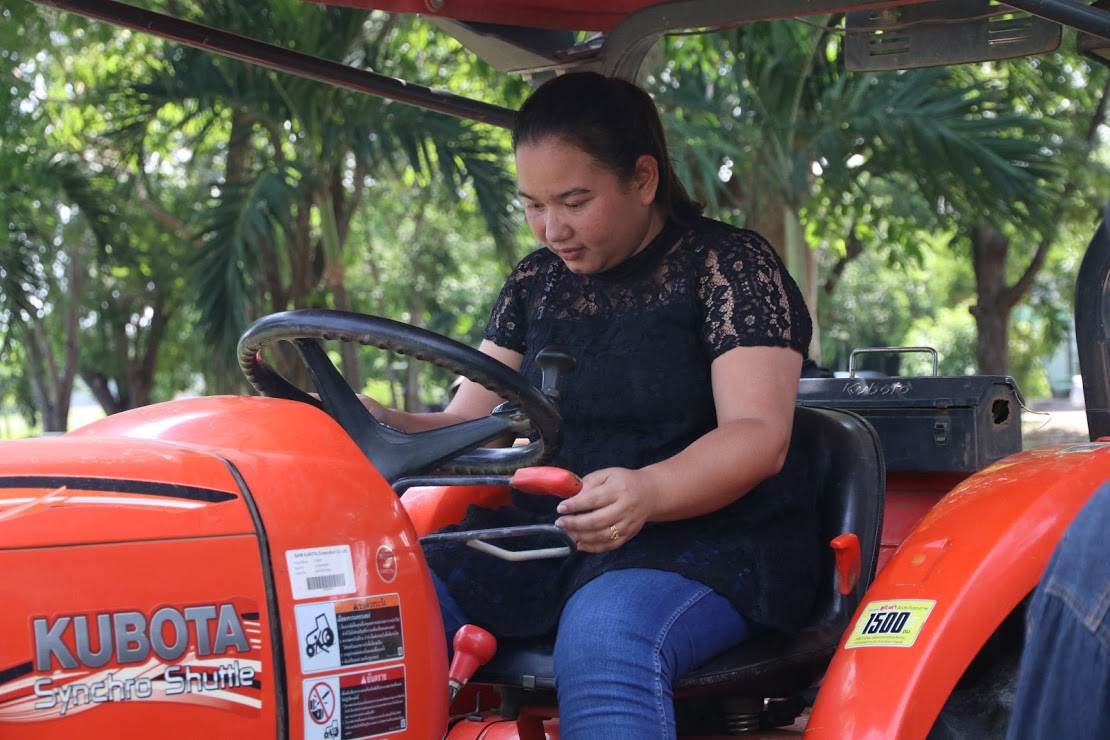
Proper use of the laser-guided land leveling system entails correct and safe tractor operation
The Phraojen Village is one of the rice-producing areas in Chainat province that needs more water during dry season. “Although we have adequate supply of water through the Chao Phraya River, we don’t have enough during the dry season so we need to take measures,” said Winai Jaengan, village head.

To overcome this challenge, the village members rely on underground irrigation during the dry season. “This is costly for us because it needs more fuel to pump the water out.   Additionally, the farmers use small walking tractors which takes time and more cost to level the field,” he added.

The Thai Rice Department, in partnership with IRRI through the CORIGAP project has introduced innovations in rice production. One of these innovations is the laser-guided land leveling.

Friday, May 31, 2019

Ushering Vietnam towards a new rice revolution using best management practices


IRRI, through the World Bank-funded project “Vietnam – Sustainable Agricultural Transformation (VnSAT),” continues to build initiatives towards producing high quality, certified environmentally safe rice in Vietnam.

By ensuring the use of sustainable best management practices in rice by following 1 Must Do, 5 Reductions (1M5R), IRRI provides technical assistance to increase the adoption of this practice that will feed into the certification of global standards like Sustainable Rice Platform. This initiative complements government supported policies like Small Farmer, Large Fields to enable smallholder farmers reap benefits from producing sustainable rice.

Thursday, May 30, 2019

IRRI and Korea partner to catalyze rural transformation through rice science


By working with Korea’s Rural Development Administration (RDA), IRRI enables rural transformation through the adoption of technologies and practices to solve complex global problems in rice-growing countries and beyond.

Since 2002, IRRI has partnered with RDA in organizing the two-week Rice Technology Transfer Systems Training Workshop (RTTS). Through this program, more than 250 participants from nine Asian countries had the opportunity to evaluate global challenges facing rice research and development. Participants were also involved in various interactive and participatory learning methods to identify and analyze research-extension linkages that enable adoption of successful new rice technologies in the field.

Thursday, May 23, 2019

Learning about the roses and thorns of digital survey data collection


Conducting a survey can be an arduous task. It entails encoding, printing, and processing, not to mention the struggle of recording handwritten notes that are sometimes difficult to read. Consequently, it can lead to gathering less reliable data.

Tuesday, May 21, 2019

Staying ahead of the curve: CGIAR holds Germplasm Seed Health Workshop


Germplasm exchange is a regulated process governed by the phytosanitary policies and procedures of International Plant Protection Convention (IPPC) and national plant protection organizations. Since inception, CGIAR centres have adopted strict code of practice to ensure phytosanitary compliance executed by the purpose-made Germplasm/Seed  Health Units (GHUs), established as per the IPPC recommendation in the 6th International Plant Protection Congress held in Montreal in August 1993. The GHUs, titled differently in some centres (e.g. Plant Quarantine Unit, Seed Health Unit, Health Quarantine Unit), have a common mission of preventing the risk of accidental spread of pests and pathogens along with the germplasm. GHUs have adopted a multipronged interdisciplinary approach to accomplish this important objective.

Monday, May 20, 2019

IRRI joins global country officials for agricultural biodiversity promotion workshop


By fostering active engagement through institutional capacity building and joining global discourse, IRRI helps countries create opportunities where they can enhance their respective agricultural–based ecosystem while boosting rice productivity.

Together with other agricultural officials from 19 countries, IRRI participated in a workshop to share strategies on germplasm conservation and the linkage between natural resources management and sustainable agriculture development. It was also an opportunity to discuss the impacts and threats of exotic species to local species, ways to ensure and maintain potential species and enable digitization of biodiversity data.

Tuesday, May 14, 2019

IRRI and partners transforming sustainable food systems landscape: EAT-Lancet Commission report launched in India


The EAT-Lancet Commission's report 'Food. Planet. Health', a groundbreaking study on nutrition, health, and the food system , was formally released for India on 4 April at headquarters of the Food Safety and Standards Authority of India (FSSAI). The Global Alliance for Improved Nutrition (GAIN), a global initiative launched by United Nations in 2012 to make nutritious food more affordable, and Tasting India, an international platform for food policy advocacy, partnered with FSSAI at the event to share key takeaways of the report, which proposes scientific targets for what comprises a healthy diet derived from a sustainable food system.