Tuesday, January 15, 2019

Alternate wetting and drying technology benefits farmers in Dhaka


18 December 2018 - IRRI organized a National Consultation and Stakeholders’ workshop on Impact of Alternate Wetting and Drying (AWD) Technology on Farm Incomes and Water Savings last 18th December at the Ministry of Agriculture (MoA) in Dhaka, Bangladesh.

The meeting was hosted by Mr. Md. Nasiruzzaman, Secretary In-charge, Ministry of Agriculture, with Special Guest Dr. Md. Abdur Rouf, Additional Secretary (Research) at the premise of MoA. Professor Dr. Lutful Hassan, Consultant, International Rice Research Institute (IRRI) chaired the meeting.

IRRI introduces life cycle assessment in rice research initiatives


The Sustainable Rice Straw Management Project, funded by the Federal Ministry for Economic Cooperation and Development (BMZ) of the German government, conducted a training workshop on sustainability analysis and best practice identification based on Life Cycle Assessment (LCA) at IRRI Headquarters on December 11 to 14, 2018.

The Mechanization and Postharvest Cluster staff, led by scientist Dr. Nguyen Van Hung and IRRI scholar Maria Victoria Migo, facilitated the training using the Simapro software for LCA geared for the rice-based researches of NARES project partners and researchers.

The training also aimed to facilitate the sharing of research results from the BMZ-funded rice straw projects and generate collaboration among participants that are interested to use LCA for their future research endeavors.

Friday, December 21, 2018

Dr. Arvind Kumar is the new Director of IRRI South Asia Regional Centre beginning February 2019


IRRI is pleased to announce that starting 1 February 2019, Dr. Arvind Kumar will serve as the Director of IRRI South Asia Regional Centre (ISARC), located in Varanasi, India.

ISARC is IRRI’s regional facility in South Asia that strengthens the national research capacity of rice-growing countries in South Asia and sub-Saharan Africa in crop production, seed quality and nutrition, and to enhance farmers’ knowledge and income.

In this critical role, Dr. Kumar will manage the overall operations of the Centre, including the development of its business plans to achieve IRRI’s strategic goals, and set its specific future strategic direction to ensure the Centre’s alignment with the vision and goals of IRRI. He will spearhead initiatives to ensure the excellence and consistency of research activities in the regional centre and act as external and national presence that communicates program results to regional and national platforms. Most importantly, he will be in charge of leading team members in building new partnerships with donors and community leaders at the Varanasi site.

Wednesday, December 12, 2018

IRRI SARC hosts first technology training to evaluate nutritional properties of food grain


4 December, Varanasi, Uttar Pradesh - IRRI’s strengthened regional presence accelerates the development of higher-yielding, healthier, and stress tolerant rice varieties that appeal to local market preferences and secure a higher premium for farmers.

IRRI-South Asia Regional Centre (IRRI-SARC) in Varanasi, Uttar Pradesh, India  held its first technology training on advanced technologies to evaluate specific nutritional properties of food grain and food products.

Rice Crop Manager helps farmers increase harvest through planting in healthy soil


The International Rice Research Institute (IRRI), with support from the Department of Agriculture (Government of Odisha), is implementing a 5-year project that aims to increase the productivity and income of farmers in 30 districts of Odisha, using cutting-edge, scientific agricultural technologies and innovative delivery systems. 
To achieve said goals, five key areas of impact were identified -- Strengthening seed systems; Efficient management of rice fallows; Raising productivity & profitability for farmers using Rice Crop Manager (RCM) by more efficient use of inputs; Enhancing farmer access to knowledge and technologies through Rice Knowledge Bank (RKB) and Rice Doctor; and satellite-based rice crop monitoring for seamless claim settlement using geographic information systems and science-based crop insurance. 

Monday, December 10, 2018

IRRI advises Nepalese farmers’ cooperative on upgrading their rice value chain to improve profits from rice farming


IMG_0992.jpg

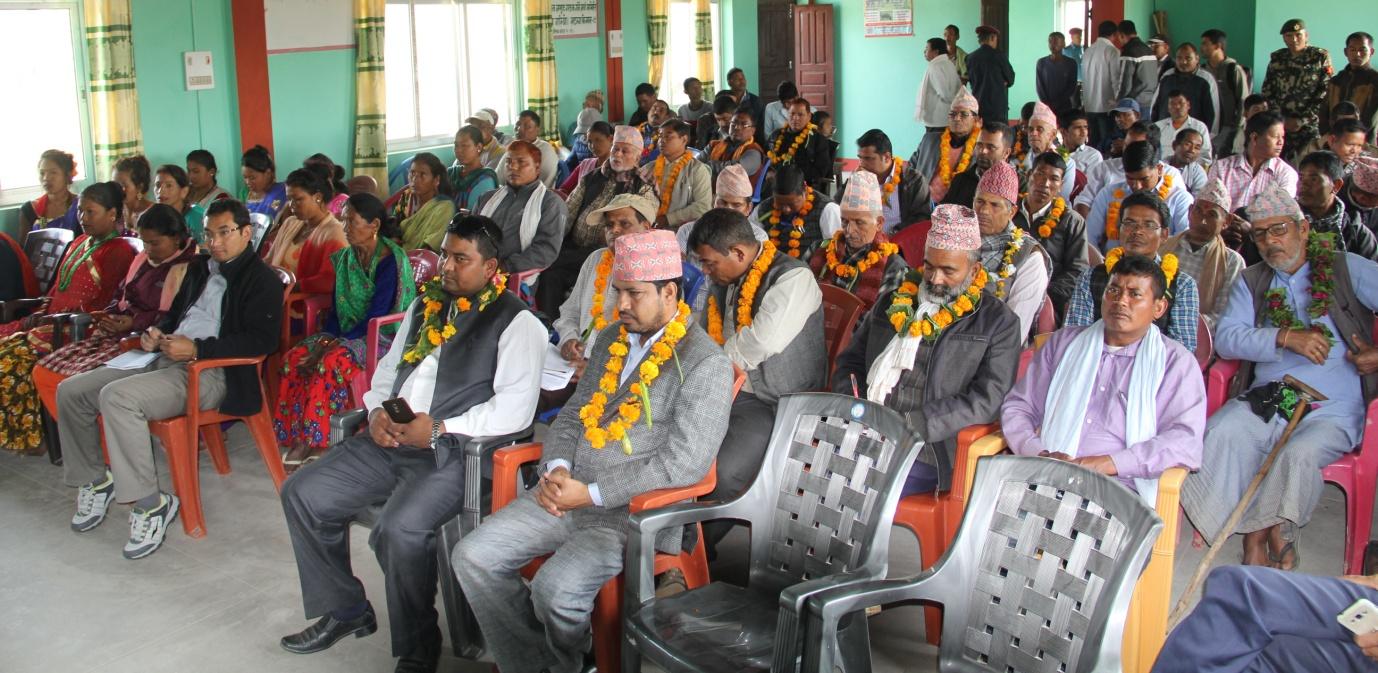
Collective action is becoming increasingly popular for effective planning and successful implementation of development work. Farmers’ cooperatives are meant for collective action and effective farmer engagement in agricultural activities aimed at increasing crop yield and profit from farming.

The Budhan Farmers’ Multi-Purpose Cooperative, situated in Barabardiya Municipality Ward Number 5, in the Bardiya District, organized a one-day interaction program on 2 November 2018 with farmers, experts, scientists from the International Rice Research Institute (IRRI) and Nepal Agricultural Research Council (NARC), as well as Nepalese government officials and authorities from federal, provincial, and local governments.

Promoting cost-effective and climate-smart production technology in Nepal rice-based farming systems


D:\0-IRRI_NEPAL\WorkingDoc\Photos DSR\Selected.jpg

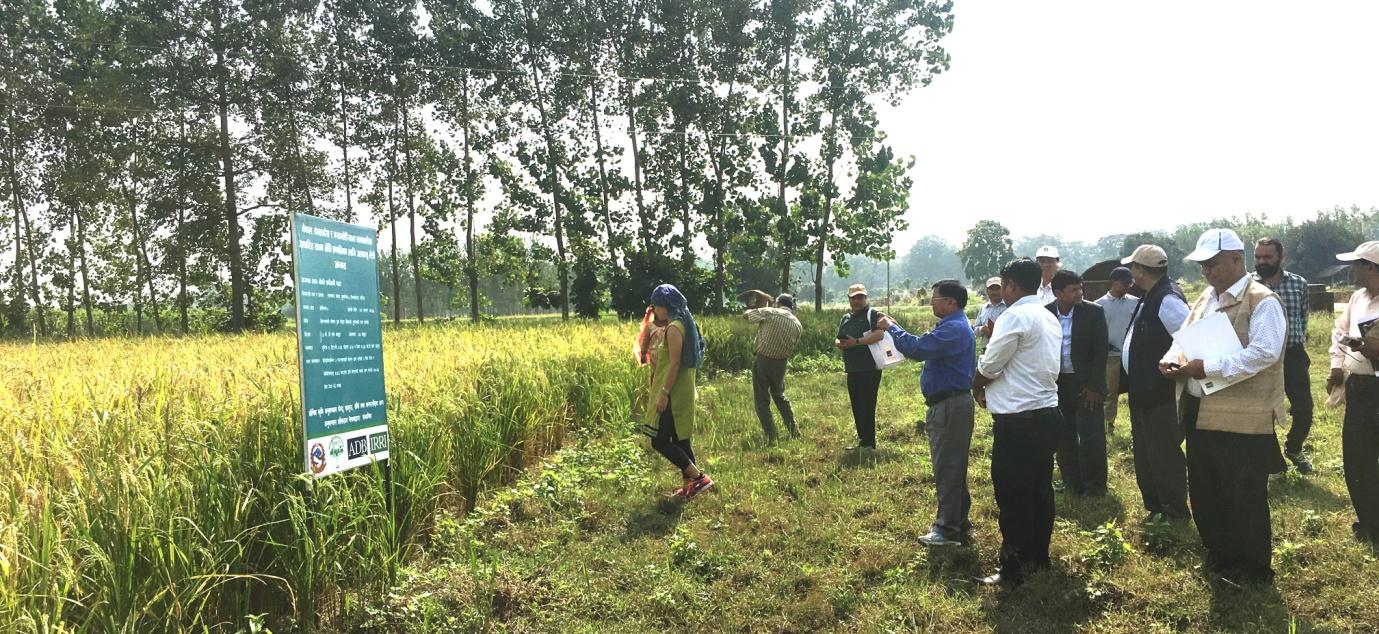
The International Rice Research Institute (IRRI) and the Asian Development Bank (ADB) are working together to advance direct seeded rice (DSR) technology and practices in Nepal, to help rice farmers reduce the costs of production while increasing rice production and promote environmentally-sustainable cultivation.

Rice is Nepal’s dominant crop, grown nearly in 1.5 million hectares. Major constraints to productivity include water scarcity, limited suitable land, and shortage of labor. In labor alone, most of the work is done by hand, with manual transplanting, weeding, and harvesting activities requiring up to 90-100 mandays per hectare land. This is equivalent to about NPR 36,800 of the total cost of production excluding other inputs like seed and fertilizers.