Monday, December 10, 2018

IRRI advises Nepalese farmers’ cooperative on upgrading their rice value chain to improve profits from rice farming


IMG_0992.jpg

Collective action is becoming increasingly popular for effective planning and successful implementation of development work. Farmers’ cooperatives are meant for collective action and effective farmer engagement in agricultural activities aimed at increasing crop yield and profit from farming.

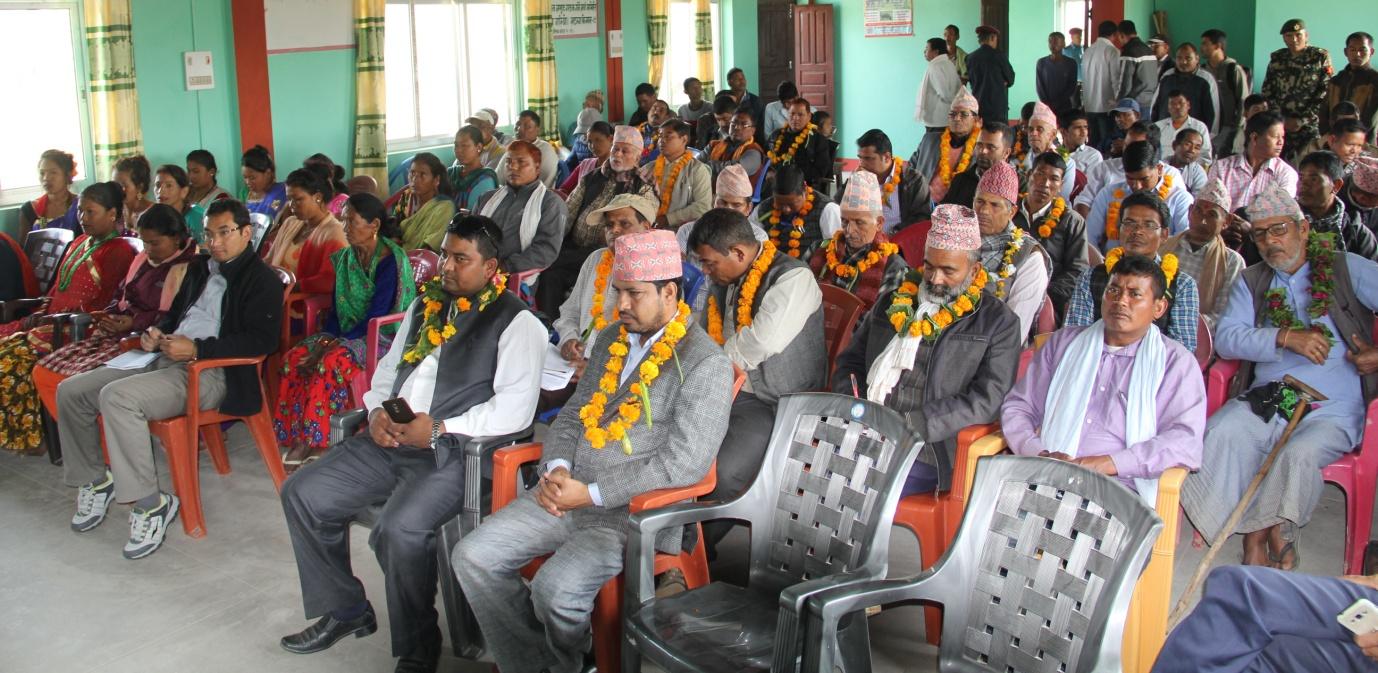
The Budhan Farmers’ Multi-Purpose Cooperative, situated in Barabardiya Municipality Ward Number 5, in the Bardiya District, organized a one-day interaction program on 2 November 2018 with farmers, experts, scientists from the International Rice Research Institute (IRRI) and Nepal Agricultural Research Council (NARC), as well as Nepalese government officials and authorities from federal, provincial, and local governments.

Promoting cost-effective and climate-smart production technology in Nepal rice-based farming systems


D:\0-IRRI_NEPAL\WorkingDoc\Photos DSR\Selected.jpg

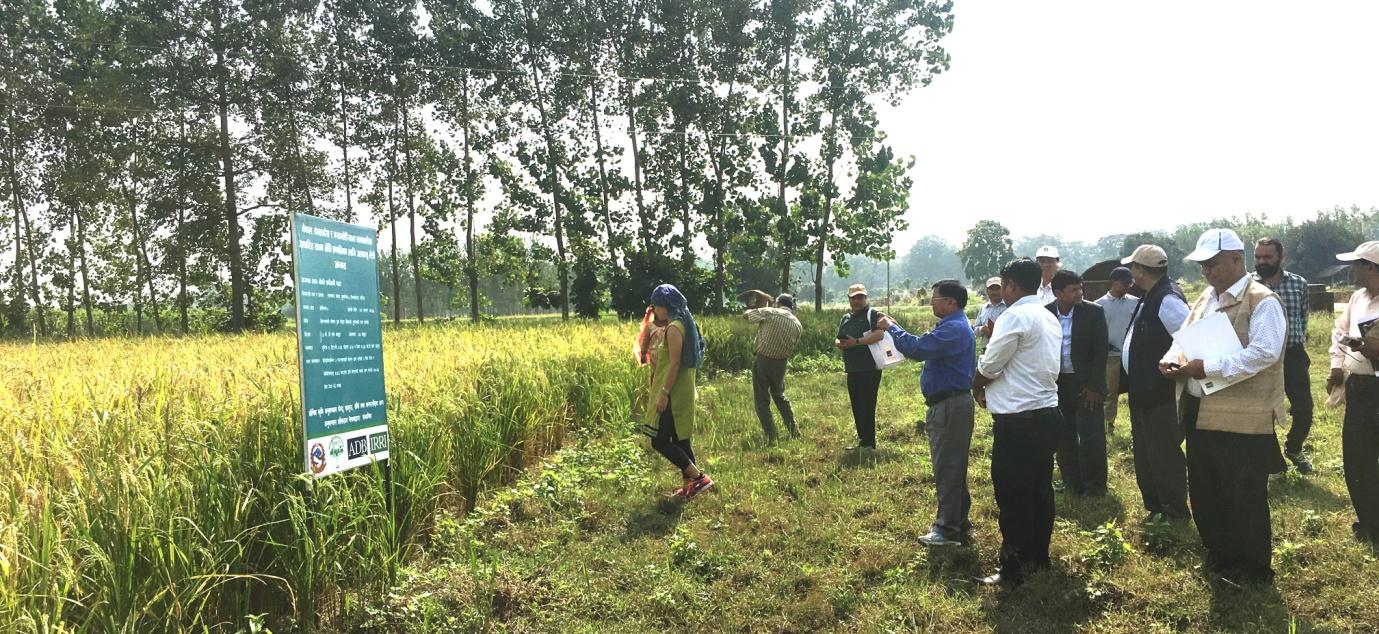
The International Rice Research Institute (IRRI) and the Asian Development Bank (ADB) are working together to advance direct seeded rice (DSR) technology and practices in Nepal, to help rice farmers reduce the costs of production while increasing rice production and promote environmentally-sustainable cultivation.

Rice is Nepal’s dominant crop, grown nearly in 1.5 million hectares. Major constraints to productivity include water scarcity, limited suitable land, and shortage of labor. In labor alone, most of the work is done by hand, with manual transplanting, weeding, and harvesting activities requiring up to 90-100 mandays per hectare land. This is equivalent to about NPR 36,800 of the total cost of production excluding other inputs like seed and fertilizers.   

Monday, December 3, 2018

Nudging Indian households towards healthier food choices


Urban and rural Indian households express their food choices after being exposed to
nutritional information on healthy diets (photo credit: Jhoanne Ynion)

Kolkata, INDIA— IRRI, through its market analysis research, gains a better understanding of consumer food choices in order to support behavioral change communication programs that aim at nudging consumers to healthier food choices in rice-based diets.

According to IRRI senior economist and leader of the “Behavioral Drivers of Food Choice in Eastern India” (DFC) project, Dr. Matty Demont, behavioral experiments among randomly selected Indian households from Kolkata, Siliguri and rural West Bengal are currently being conducted. Respondents are exposed to several incremental levels of nutritional information on healthy diets through a Behavioral Change Communication (BCC) broadcast featuring renowned nutritionist Dr. Anindita Ray (Chakravarti) from Maharani Kasiswari College, Kolkata. Participants are then invited to plan their weekly household meals through an interactive app (similar to the investment game application) which captures the rich diversity of day-to-day food choices in West Bengal.

Thursday, November 29, 2018

CORIGAP student research about herbicide effects on amphibians receives high profile environmental award


Having a weed-free rice field is ideal, but not at the expense of nature. IRRI, through the Closing Rice Yield Gaps in Asia with Reduced Environmental Footprints (CORIGAP) project, continues to do cutting-edge research to boost rice productivity while safeguarding environmental health.

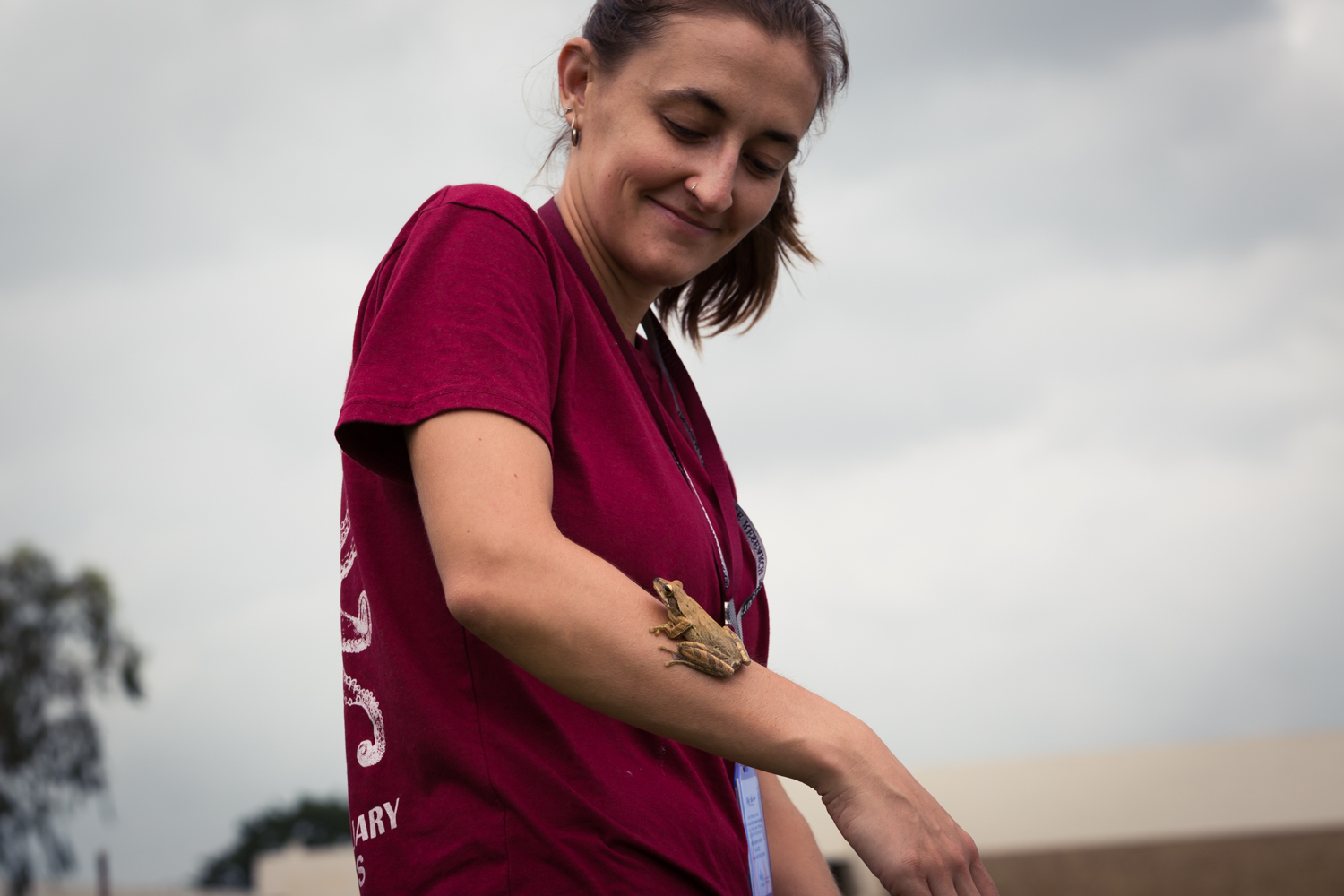
According to Molly Shuman-Goodier, a CORIGAP-supported PhD student from the Northern Arizona University, amphibians species, such as frogs, contribute a number of beneficial ecosystem services to wetlands and irrigated rice fields. However, the application of herbicides like butchalor, which is used extensively in rice fields in Southeast Asia, affect the amphibians’ reproductive and developmental cycles.

“We would like to find out whether the application of the herbicide affect the growth and thyroid physiology of the cane toads, at what stage it is mostly affected, and to test the degree to which tadpoles can acclimatize to sub-lethal herbicide exposure,” Molly says.

Friday, November 23, 2018

Enhancing livelihoods through rice straw: farmer groups learn about rice straw collection options


The Philippine Rice Research Institute (PhilRice), Philippine Carabao Center (PCC), and IRRI conducted a rice straw baler demonstration at the PhilRice Central Experiment Station in Muñoz, Nueva Ecija for the project “Development of Sustainable Rice Straw Management Practices and Technologies for Bioenergy, Food, and Feed in the Philippines”, or RiceStrawPH.

The RiceStrawPH project aims to develop and provide alternative uses of rice straw in order to add value to the rice byproduct, instead of farmers simply burning them. “We are looking for ways where Filipinos can enhance their livelihoods through innovative uses of rice straw, like mushroom growing and ruminant feed.” said Dr. Caesar Tado of PhilRice, one of the project leaders. 

“In the Philippines, we have legislation that prohibits the burning of rice straw, and Nueva Ecija also has a local ordinance that discourages this practice. This helped the Philippines significantly decrease rice straw burning incidence from more than 90% in the early 2000s, to around 30% in 2017.” he added.

Thursday, November 22, 2018

Vietnamese rice farmers optimize rice productivity whilst reducing the environmental footprint of rice production


IRRI continues to develop and promote practices that increase benefits for smallholder farmers while improving the environmental sustainability of rice production.

As rice production in the Mekong Delta faces challenges to economic and environmental sustainability, a group of scientists and extension specialists from IRRI and the Department of Agriculture and Rural Development of Can Tho assessed different rice crop management practices in Mekong Delta, Vietnam, based on farm-level performance indicators of the Sustainable Rice Platform.

PRISM, a great advantage


At the 5th Philippine Rice Information System (PRISM) convention, the Philippine Department of Agriculture (DA) Secretary Manny Piñol, through a message read by his representative Assistant Secretary Andrew Villacorta, highlighted the government’s aim to provide affordable food for the people  by investing in research and development of modern technologies.

In Sec. Piñol’s keynote message, he stated “An information system on rice is a big step for us to achieve our goal of rice food security accompanied by enhancing the industry’s competitiveness.” He acknowledged PRISM for providing the agriculture department with timely information on rice areas, production, yield estimate and other factors affecting it, and for helping regional field offices in enhancing their capability in ground data collection, data management, geographic information systems, and other relevant skills.