Showing posts with label Northern Arizona University. Show all posts

Thursday, April 25, 2019

Frogs can be heroes or villains in the rice ecosystem, a new study revealed


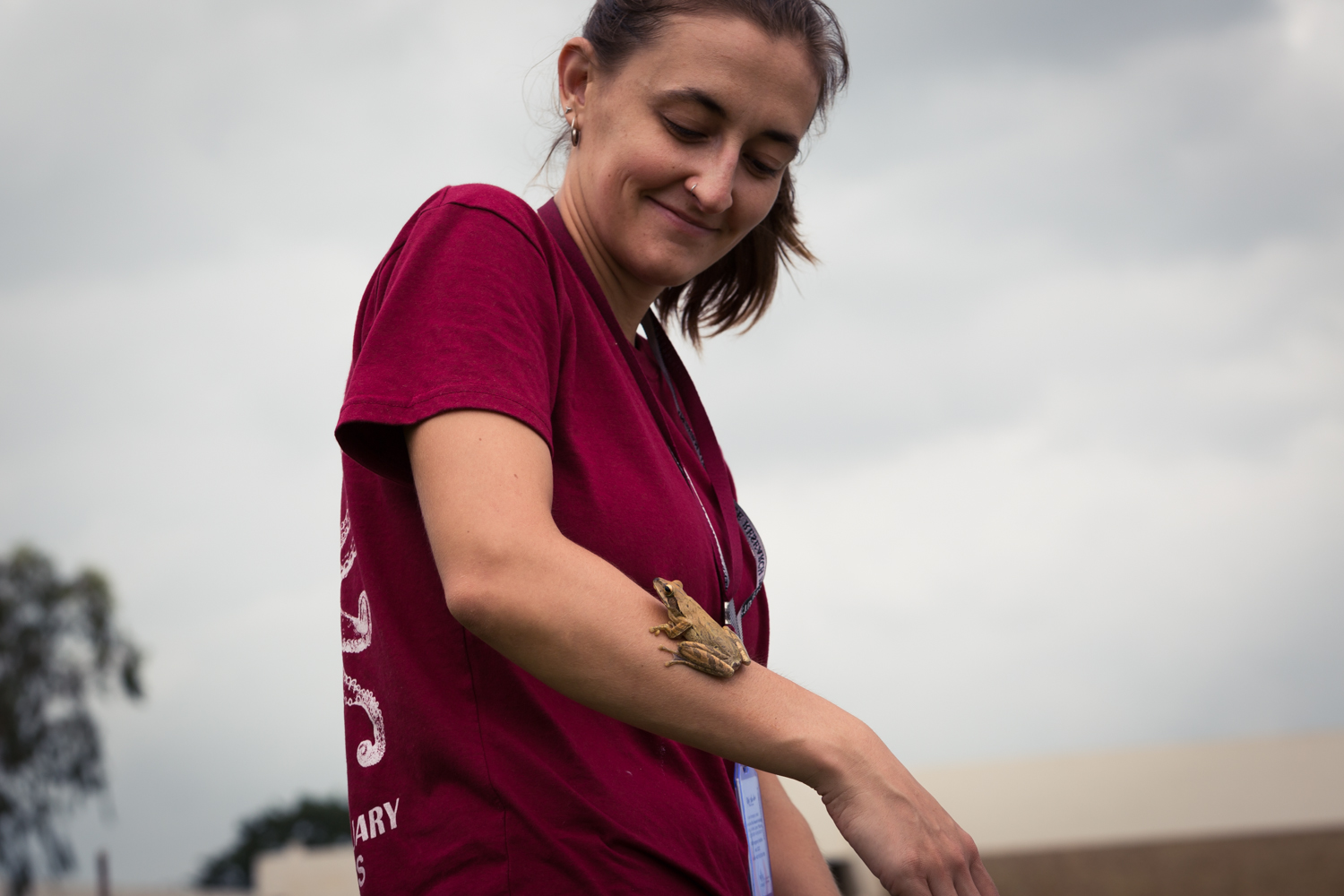
Molly Shuman-Goodier, lead researcher, recently earned her PhD at the Northern Arizona State University. Grant Singleton, IRRI’s Principal Scientist and CORIGAP project leader, served as one of her supervisors

In a recent study published in the internationally renowned journal Agriculture, Ecosystems, and Environment, researchers from the Northern Arizona University, the International Rice Research Institute, and the University of Greenwich investigated the functional roles of frogs in the rice ecosystem. The research was conducted on the Zeigler Experiment Station at IRRI, and led by Molly Shuman-Goodier a PhD student who graduated from Northern Arizona University  in April 2019.

A field survey was conducted in two separate rainy seasons of 2015 and 2017 to determine whether the endemic native Luzon wart frogs (Fejevarya vittigera) and non-native cane toads (Rhinella marina) consume rice pests and which is more effective in doing so.  The diet composition of the two species was also examined to determine how these two species compete for food resources in the rice fields. 

Thursday, November 29, 2018

CORIGAP student research about herbicide effects on amphibians receives high profile environmental award


Having a weed-free rice field is ideal, but not at the expense of nature. IRRI, through the Closing Rice Yield Gaps in Asia with Reduced Environmental Footprints (CORIGAP) project, continues to do cutting-edge research to boost rice productivity while safeguarding environmental health.

According to Molly Shuman-Goodier, a CORIGAP-supported PhD student from the Northern Arizona University, amphibians species, such as frogs, contribute a number of beneficial ecosystem services to wetlands and irrigated rice fields. However, the application of herbicides like butchalor, which is used extensively in rice fields in Southeast Asia, affect the amphibians’ reproductive and developmental cycles.

“We would like to find out whether the application of the herbicide affect the growth and thyroid physiology of the cane toads, at what stage it is mostly affected, and to test the degree to which tadpoles can acclimatize to sub-lethal herbicide exposure,” Molly says.