Tuesday, August 6, 2024

TechnoServe launches Millers for Nutrition Initiative in Kenya to combat widespread micronutrient deficiencies

In a significant move to address widespread hidden hunger in Kenya, the Market Intelligence Initiative was invited to partake in the launch of the Millers for Nutrition Initiative in Kenya. Millers for Nutrition is a global initiative composed of 8 countries that aim to provide access to safe, nutritious food for all citizens.

Kenya, like many sub-Saharan African countries, faces a critical challenge with micronutrient deficiencies, often referred to as “hidden hunger.” UNICEF, the Kenyan demographic health survey, and WHO estimate that about 40% of women in their reproductive age (15-49 years) suffer from iron deficiency. Furthermore, around 26% of children under the age of five years are affected by iron deficiency anemia. In addition, about 30% of women and men are zinc deficient, and an additional 51% of children under the age of five suffer from zinc deficiency. Iron and zinc deficiencies result in stunted growth, wasting, and cognitive impairments. Vitamin A deficiency affects about 16% of women and men and 33% of children under 5 years.

Millers have been identified as a key group to help ease the burden of hidden hunger through fortification strategies of major staple crops such as maize, wheat, and edible oils. These consumer products are currently fortified in Kenya, with rice gaining greater attention through the Ministry of Health and the Ministry of Investments, Trade, and Industry, which highlighted the importance of safe, nutritious food through the improvement of fortification technology and standards. The rice fortification strategy for Kenya will be launched shortly.

Cereal fortification has been shown to be effective in addressing malnutrition, but the presenters highlighted that this is not always easy to achieve. Food safety issues like aflatoxin contamination often result in poor products. The Kenya Millers Fortification Index (KMFI), an assessment tool developed to monitor and evaluate the progress and effectiveness of fortification programs in Kenya, was implemented through collaborative efforts involving the Kenyan government, the Kenya Bureau of Standards (KEBS), milling companies, and non-governmental organizations.

Wednesday, July 24, 2024

Crop cafeterias facilitate the widespread dissemination and adoption of superior rice varieties across Bangladesh

The International Rice Research Institute (IRRI) in Bangladesh and the Bangladesh Agricultural Development Corporation (BADC) organized a crop cafeteria on 11 May 2024 at the BADC Seed Multiplication Farm in Tangail.

DA delegation visits Vietnam to enhance Philippine rice production

A delegation from the Philippines' Department of Agriculture visited Vietnam to learn about their successful sustainable rice production program. The Philippines hopes to adopt similar practices to improve yields and farmer profits and reduce greenhouse gas emissions.


In a recent visit to Vietnam, DA Secretary and IRRI Board of Trustees Ex-Officio Member Francisco Tiu Laurel, Jr. engaged in a series of knowledge exchange events to learn about sustainable rice production. During his visit, Vietnam's experience with the "Sustainable Development of One Million Hectares of High Quality and Low-Emission Rice Associated with Green Growth in the Mekong River Delta By 2030" program was particularly highlighted.

Tuesday, July 23, 2024

IRRI scholar awarded best thesis for weed science

Kim Diane Nocito, an Affiliate BS Scholar in IRRI, recently won the Best Undergraduate Thesis for Weed Science given by the Weed Science Society of the Philippines during the 56th Pest Management Council of the Philippines Scientific Conference held last June in Boracay, Aklan.

Thursday, July 11, 2024

Breeders identify promising lines for developing future rice varieties for South Asia

  • More than 100 promising lines were selected by IRRI and India NARES partners for the future development of improved rice varieties.
  • Coordinated efforts between institutions significantly enhanced rice research and development in the region.
  • IRRI and ICAR-IIRR coordination is crucial in providing technical support to NARES partners for capacity building. 


IRRI South Asia Hub, Hyderabad, India (25 May 2024)— More than 30 scientists from the International Rice Research Institute (IRRI )South Asia Hub and the Indian Council of Agricultural Research-Indian Institute of Rice Research (ICAR-IIRR) participated in a rigorous selection process of breeding lines for developing superior rice varieties.

Monday, July 1, 2024

Odisha and IRRI promote sustainable rice production using dhaincha and organic fertilizer


  • IRRI promotes enhanced crop and soil productivity through the balanced use of chemical and organic fertilizers.
  • IRRI and the Odisha Department of Agriculture and Farmers’ Empowerment trained department-selected staff on dhaincha seed production and green manuring.
  • The staff will share the benefits of dhaincha and organic fertilizer in rice-based cropping systems with farmers.


The Odisha Department of Agriculture and Farmers’ Empowerment (DA&FE) promotes cultivating dhaincha and organic fertilizer to improve farmers' productivity and ensure the sustainability of the state’s agriculture sector.

IRRI and BSIP Central Java advance rice farming through optimized nutrient and water management

  • IRRI is supporting Indonesian efforts to broaden knowledge and usage of RCM
  • The RCM web app helps rice farmers use the right amount of fertilizer and water
  • This can contribute to better productivity and reduced GHG emissions

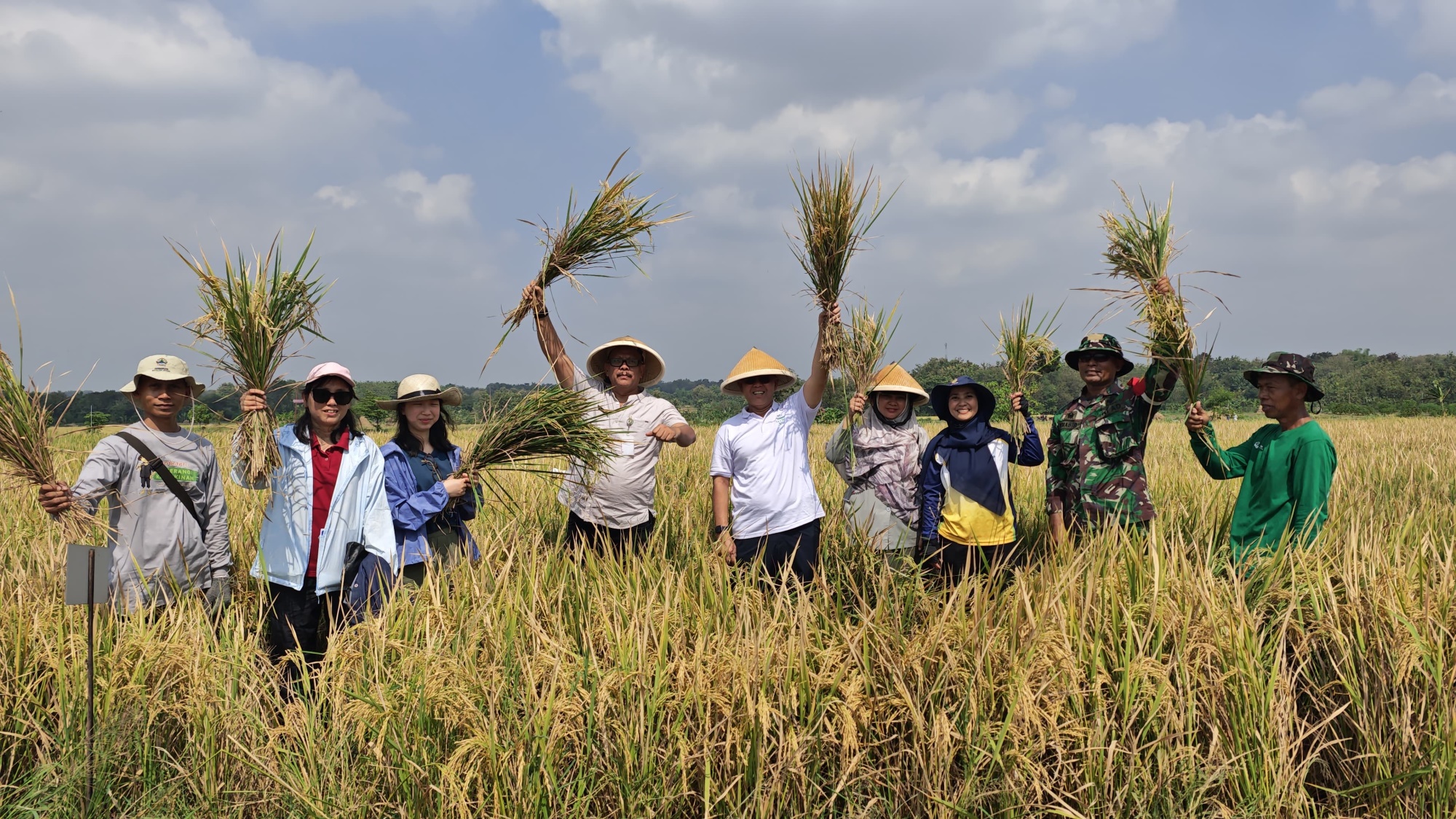
(UNGARAN - BOYOLALI, Indonesia, 25 - 27 June) - IRRI and its key partner organization, BSIP (Indonesian Institute for Agricultural Instrument Standard Implementation) Central Java, are committed to contributing to the Indonesian government's goals for rural prosperity, food security, environmental sustainability, and climate mitigation and adaptation. As part of this commitment, IRRI and BSIP are working together on the Rice Crop Manager (RCM) Indonesia project to broaden its dissemination, enhance its algorithm, and showcase its results through field trials.