Showing posts with label NARES. Show all posts

Friday, March 12, 2021

IRRI research partners present sustainability plans for WeRise in the Philippines


National agricultural research and extension system (NARES) in the Philippines presented their sustainability plans for the Weather-Rice-Nutrient Integrated decision support system (WeRise).  The plans were presented during a virtual and on-site Handover Ceremony and Sustainability Workshop on 09 March 2021.

WeRise is a digital tool for rainfed rice farmers adapted for the Philippines by the International Rice Research Institute (IRRI) with funding from Japan International Research Center for Agricultural Sciences (JIRCAS). The project is implemented by IRRI, Department of Agriculture (DA)-Philippine Rice Research Institute (PhilRice) and JIRCAS. WeRise provides advisories on the best time to plant and apply fertilizer using suitable varieties based on weather conditions, crop growth, selected farm characteristics, and management practices. The advisories are web-based and can be accessed through a computer or smartphone three months before the cropping season. This gives farmers sufficient time to allocate limited resources such as capital, labor, and inputs and plan for upcoming cropping seasons. 


The participants presented activities related to scaling up use of the tool, further validation in additional locations, increasing awareness of the tool, and institutionalizing WeRise through the Rice Competitiveness Enhancement Fund and Smarter Rice Program Package of Technologies for rainfed rice areas. PhilRice Deputy Executive Director for Research, Eduardo Jimmy Quilang also suggested the “Popularize, Sustain and Scale through Partnerships” approach, which served as the framework of the sustainability plans used by some DA regional and municipal offices. 

Wednesday, April 4, 2018

Sowing the seeds of rice self-sufficiency in Africa through capacity building

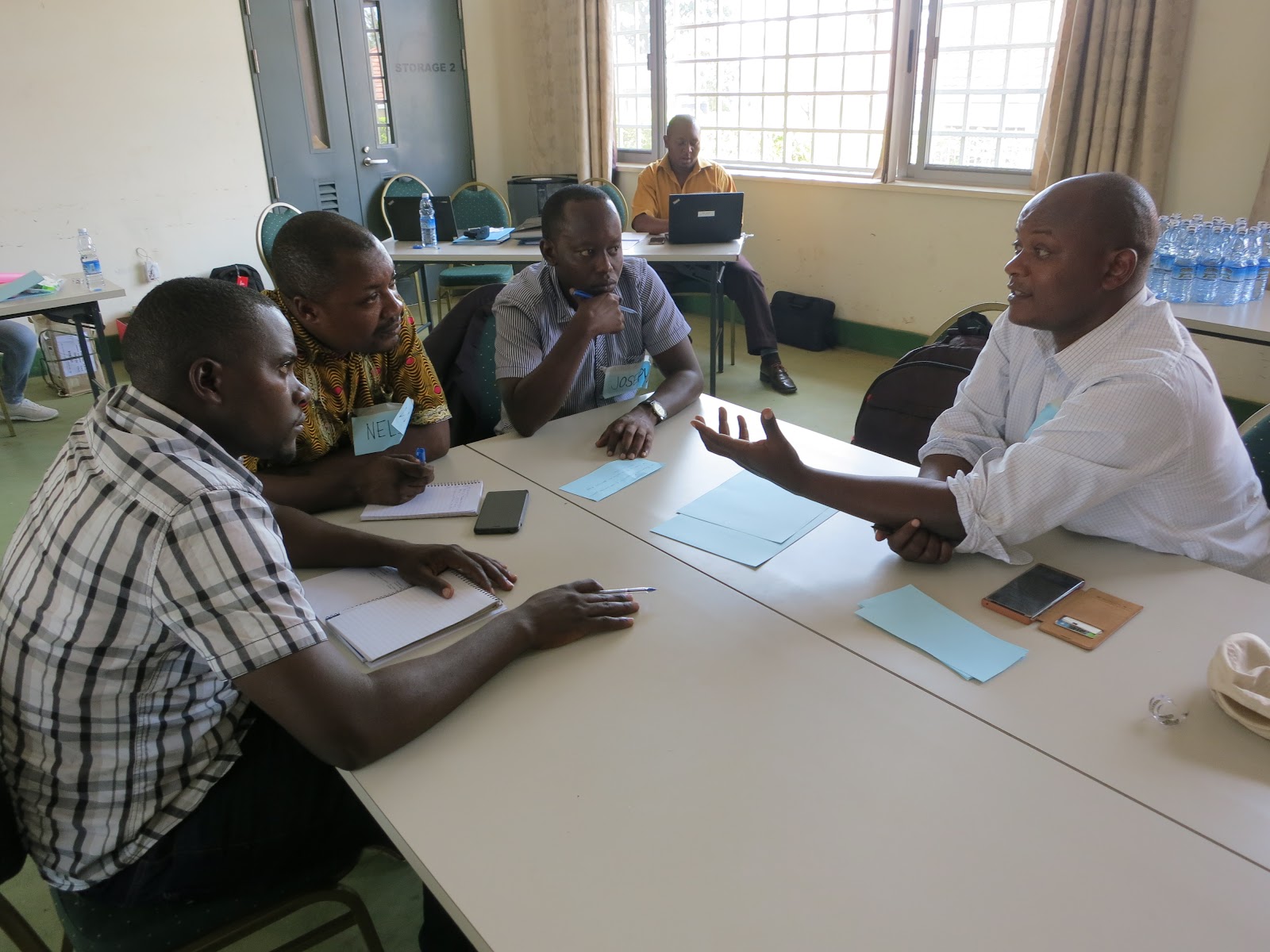
Workshop participants discuss constraints in the production and delivery of quality rice seed in Uganda.

IRRI works closely with national research and extension systems (NARES) in making scientific knowledge and expertise on rice science more widely accessible. Together with the Philippine Rice Research Institute (PhilRice) and funded by the Japan International Cooperation Agency (JICA), IRRI aims to improve the quality of rice seed production, which contributes to food and livelihood security of smallholder farmers in member countries of the Coalition of African Rice Development (CARD).

Since 2016, IRRI-JICA-PhilRice has developed and facilitated two training programs in the Philippines: the three-week Quality Breeder and Foundation Seed Course conducted at IRRI Headquarters and the eight-week Specialized Course on Rice Seed Production and Extension held at PhilRice Central Experiment Station. To date, 83 individuals have been trained from 18 out of 23 CARD member countries.

Friday, August 14, 2015

Spend more time in the field - IRRI scientist

Scientists should dialogue with farmers and connect with partners to facilitate technology development and adoption.

“How can we work in the diverse rice farming systems of Southeast Asia, especially in unfavorable environments?” asked Yoichi Kato, rainfed lowland agronomist, during his seminar on 14 August at the International Rice Research Institute (IRRI).

Dr. Kato explained that drought, flooding, and salinity are some of the climate-related challenges that the rice production systems in the region need to cope with. To address these problems, Dr. Kato’s group has been conducting research on the regulation of plant elongation, nursery management, rice adaptation to soil-water fluctuation, mechanized direct seeding of rice (DSR), and diversified cropping systems.

Some updates and initial results of their research activities include:
  • in collaboration with rice breeders, identified some promising genotypes and/or cultivars with short growth duration to cope with limited irrigation periods in the dry season, and genotypes and/or cultivars for dry-seeded rice culture for labor savings;
  • regulation of plant elongation plays a pivotal role in stagnant-flooding tolerance in the field; 
  • diversified cropping in rice-based systems is the better strategy for flood-prone areas.
But beyond the realm of research, Dr. Kato stressed other important matters he learned from his experience in field-oriented research for development.

Focus on the process rather than the perfect product. Scientists should pay careful attention to the process of introducing a certain idea or technology to farmers rather than focus on developing a perfect product. Farmers are often given straightforward options that they can either accept or reject. Dr. Kato suggested that a product or idea can be “half baked” (60% complete)—not a “complete solution or technology”—when offered to farmers.

“Any product should be reviewed by farmers in the farmers’ fields,” he said. “As experts themselves, farmers have their own idea and opinion on how they could make their crops adapt to stress-prone environments.”

Networks and partnerships are important. In technology development and outscaling, networks of partners and stakeholders play an important function. “IRRI can capitalize and build on its very strong network and links especially with the NARES," Dr. Kato said. “In fact, through this partnership with NARES, IRRI has successfully developed a series of stress-tolerant varieties and have disseminated them to farmers’ field.” Also, through networks and partnerships, the transfer of information and technology can be facilitated. “Here, IRRI can play an important catalytic function,” he added.


Learn more about IRRI (www.irri.org) or follow us on the social media and networks (all links down the right column).

Tuesday, July 17, 2012

Thailand: Young socioeconomic researchers undergo methodology and data management training


The Consortium for Unfavorable Rice Environments (CURE) organized a training-workshop on methodologies and data management for socioeconomic studies for young researchers on 11-13 July 2012 at the Nakhon Ratchasima Rice Research Institute (NRRC) in Nakhon Ratchasima Province, Thailand.
 
Eleven researchers and assistant researchers (8 women and 3 men) from the NRRC participated in the training-workshop, which aims to enhance the skills of CURE’s NARES partners in the conduct of socioeconomic surveys, data management, and in the use of systematic data entry.

Digna Manzanilla, social scientist and associate CURE coordinator, and Leo Angelo Ocampo, assistant scientist of CURE, conducted the training-workshop, which covered the socioeconomic aspect of research, the survey questionnaire, and good practices in the conduct of surveys.

The training-workshop kicked off the conduct of surveys in the two villages of Srapatoom and Nongbuan in Nakhon Ratchasima. It was organized with support from the IFAD project Improving livelihoods in the drought-prone lowlands of southeast Asia in collaboration with Varapong Chamarerk, senior scientist and CURE keysite coordinator in Thailand; Sommai Lertna of NRRC, and the Ubon Ratchathani Rice Research Center.

The activity was graced by Duangjai Suriya-Arunroj, NRRC senior scientist, who represented the center director.